Why This Fails Locally
Most houses in Bigfork went up around 1994
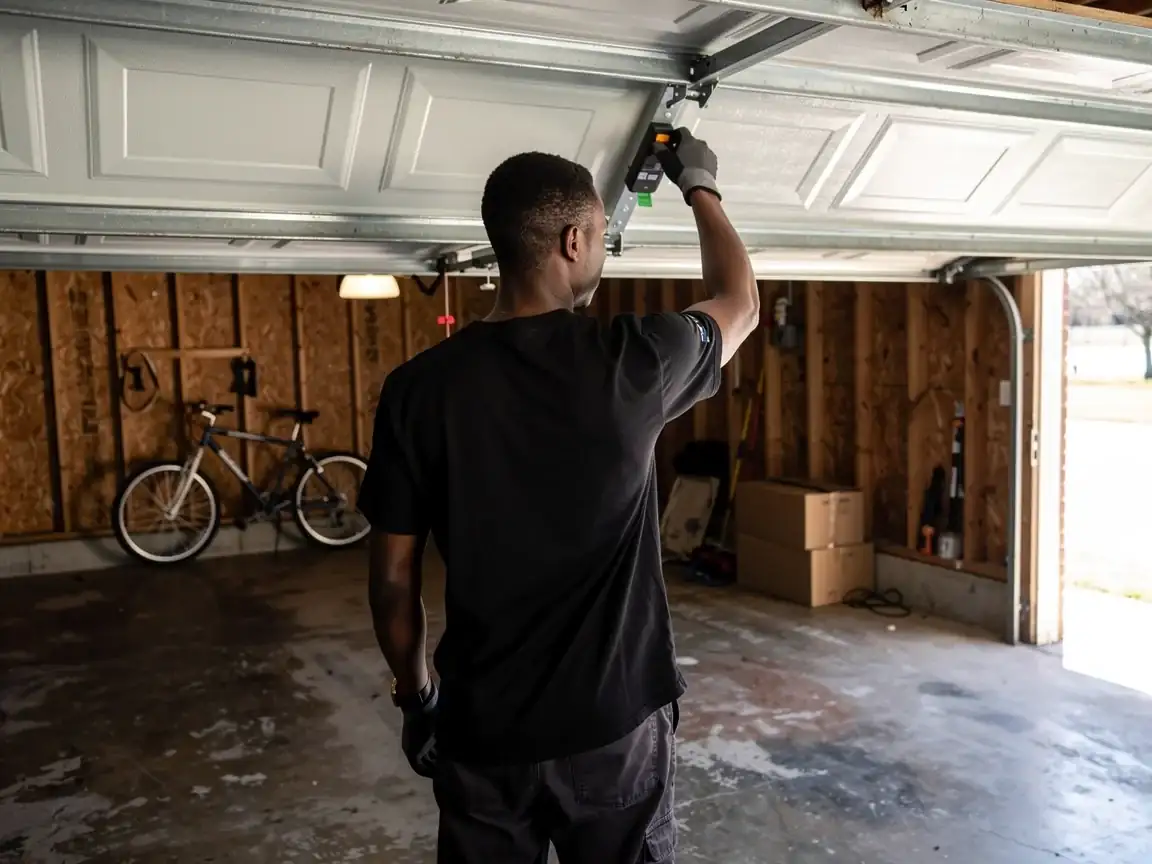
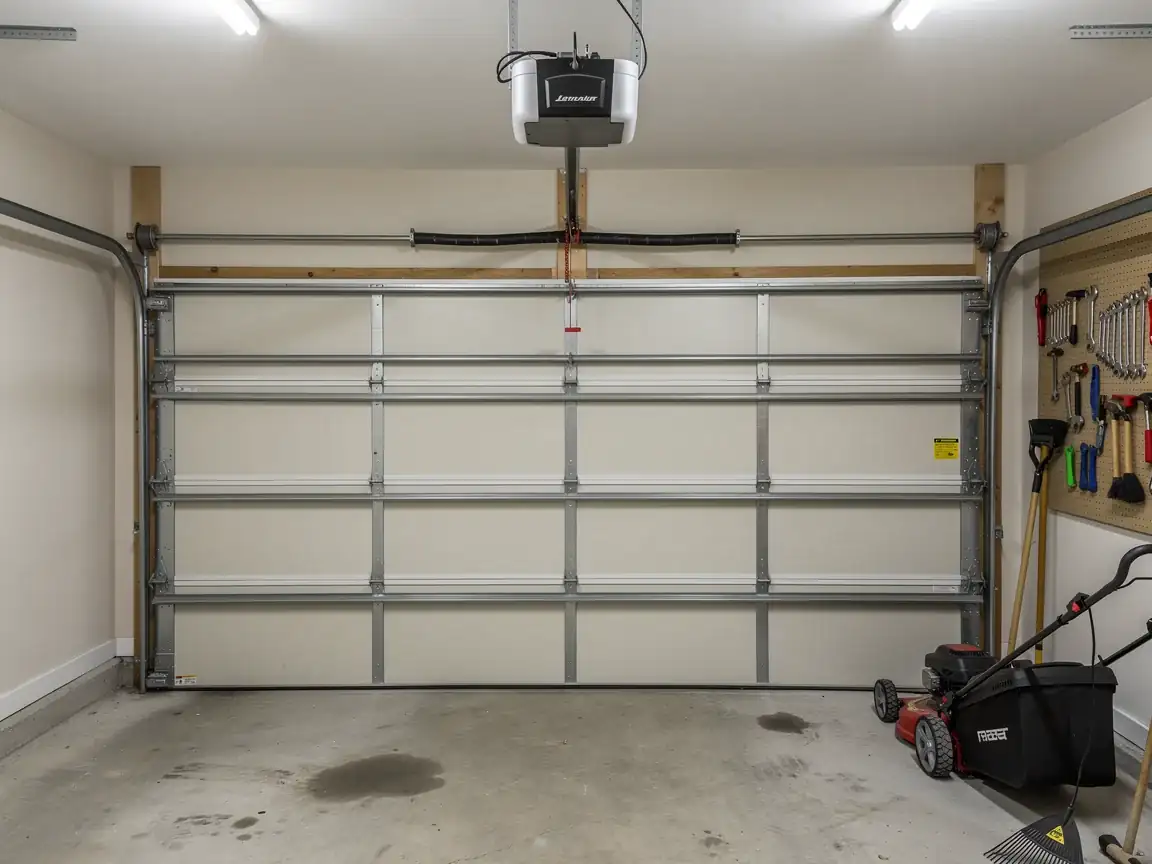
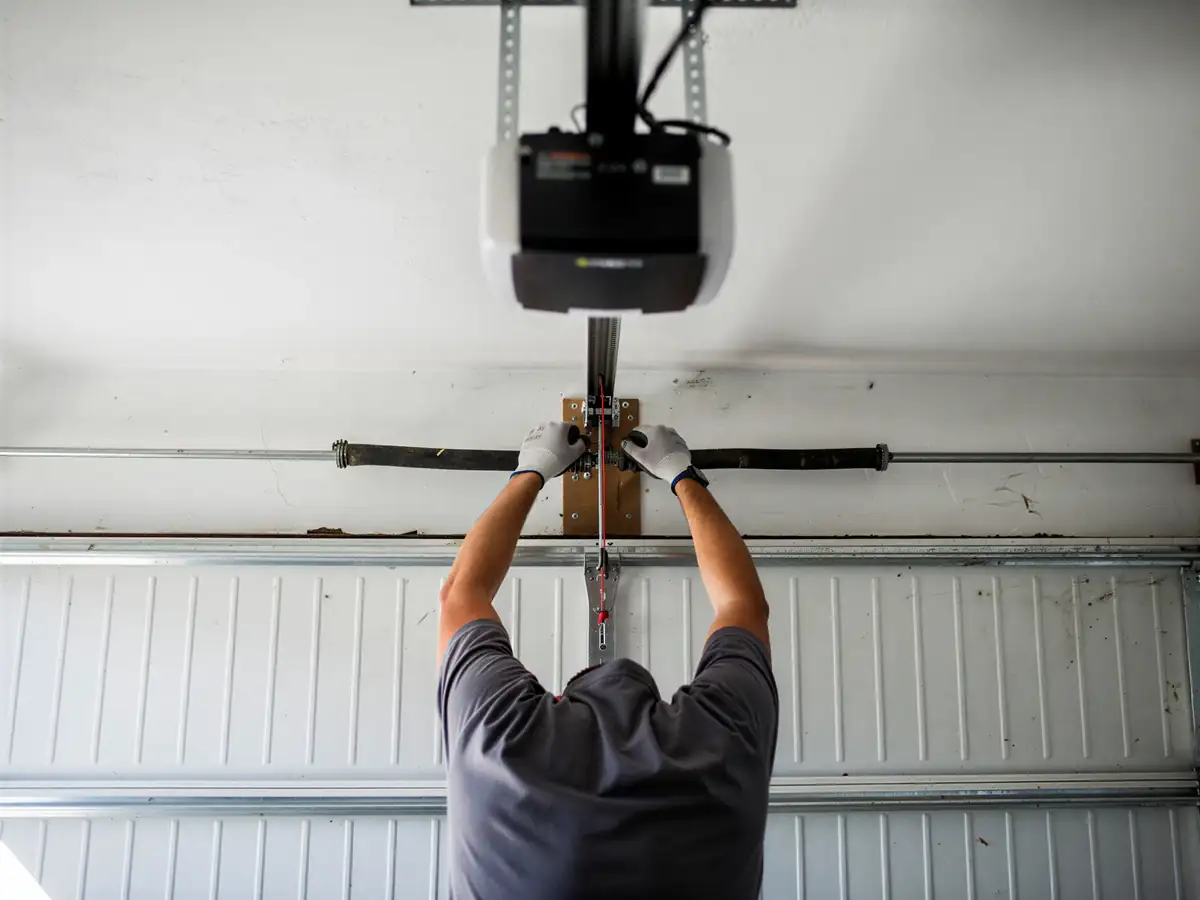
A little newer than the service area's overall median of 1988. That matters because 1993 is roughly when federal law required garage door openers to ship with photo-eye reversing sensors as standard equipment. A house built in Bigfork in the mid-90s got one of the first generations of openers built to that rule - and that opener is now pushing three decades old. The nylon drive gear inside those units wears out from the inside; you hear it as grinding or the door stopping halfway with the motor still running.
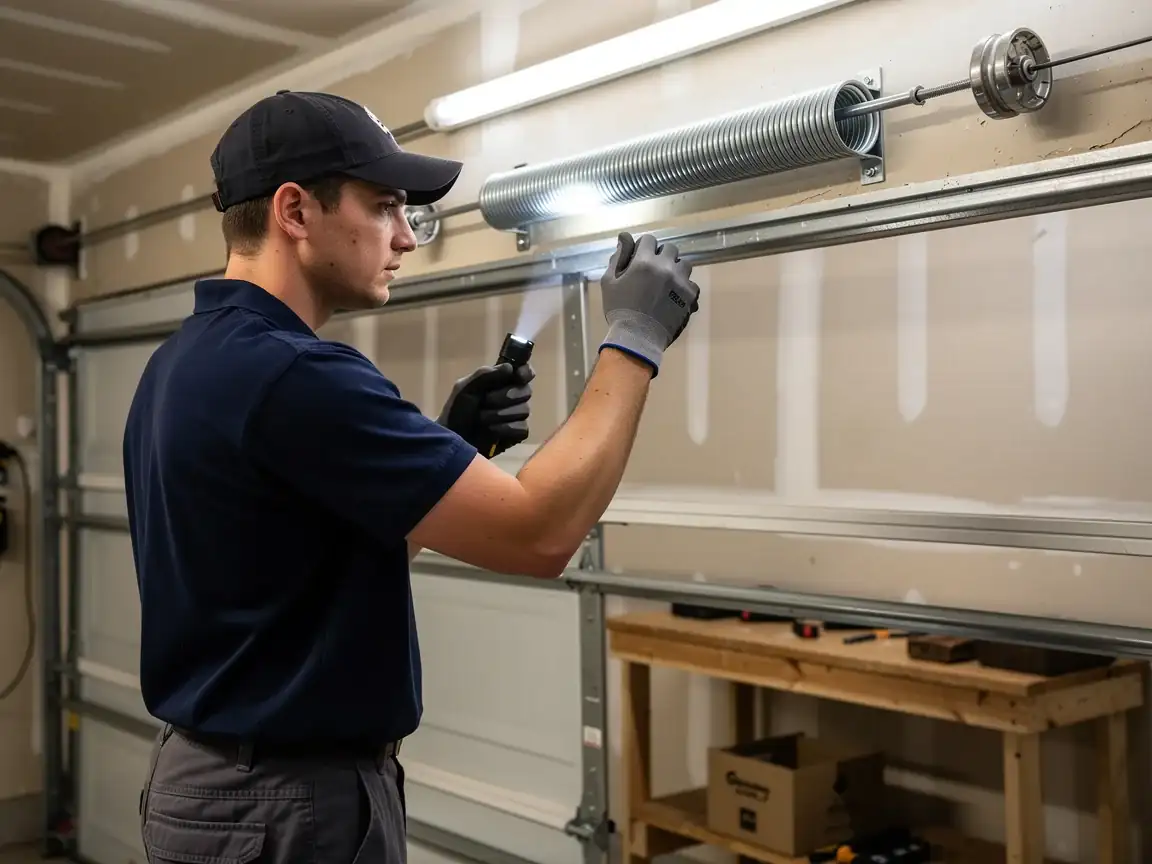
The torsion springs on these same houses are on their second or third replacement by now if anyone's kept up with them
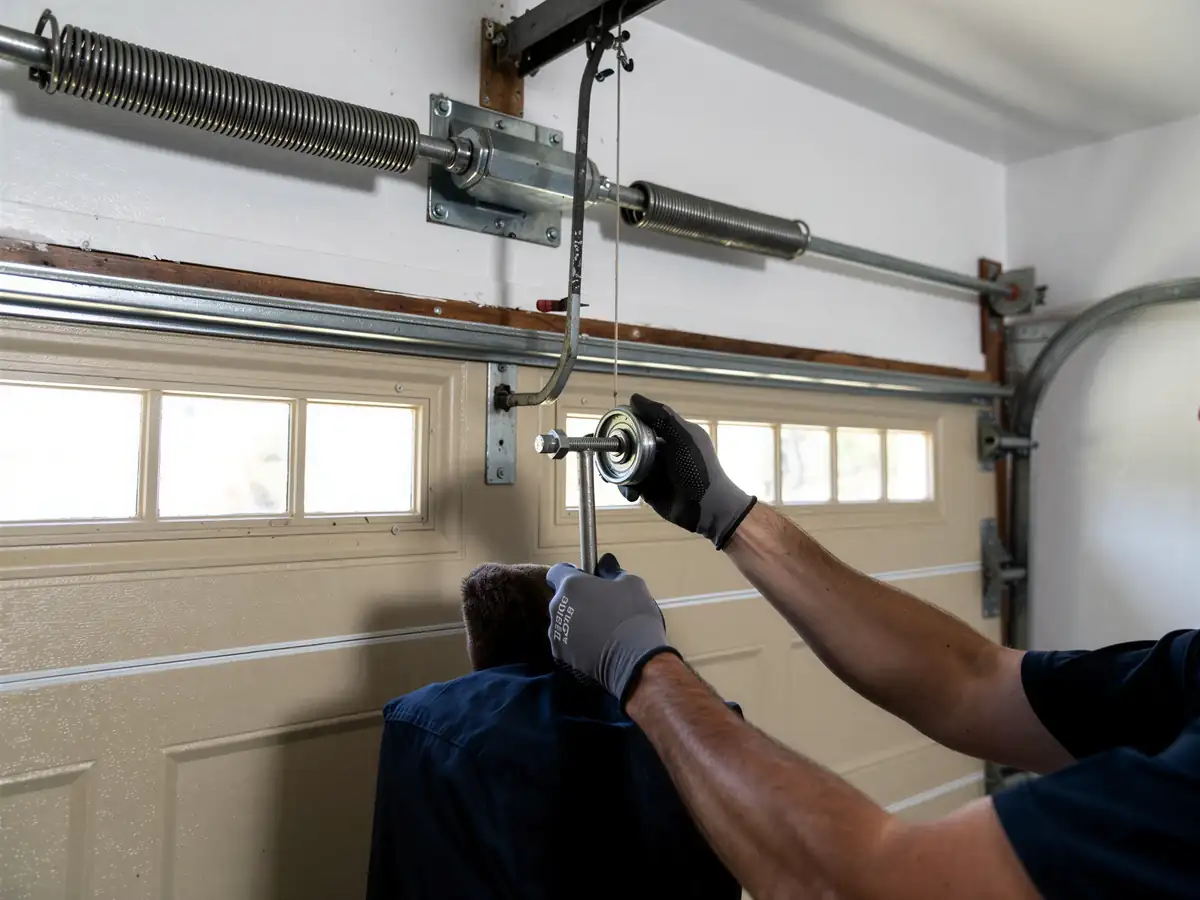
And on their first failure if nobody has. A spring rated for roughly 10,000 to 15,000 cycles doesn't care how old the house is, only how many times the door's gone up and down. In a neighborhood built in a tight 15-year window like Bigfork's, we see the same spring failure on three houses on the same block within a season of each other, because they were all installed around the same year.
The Symptom
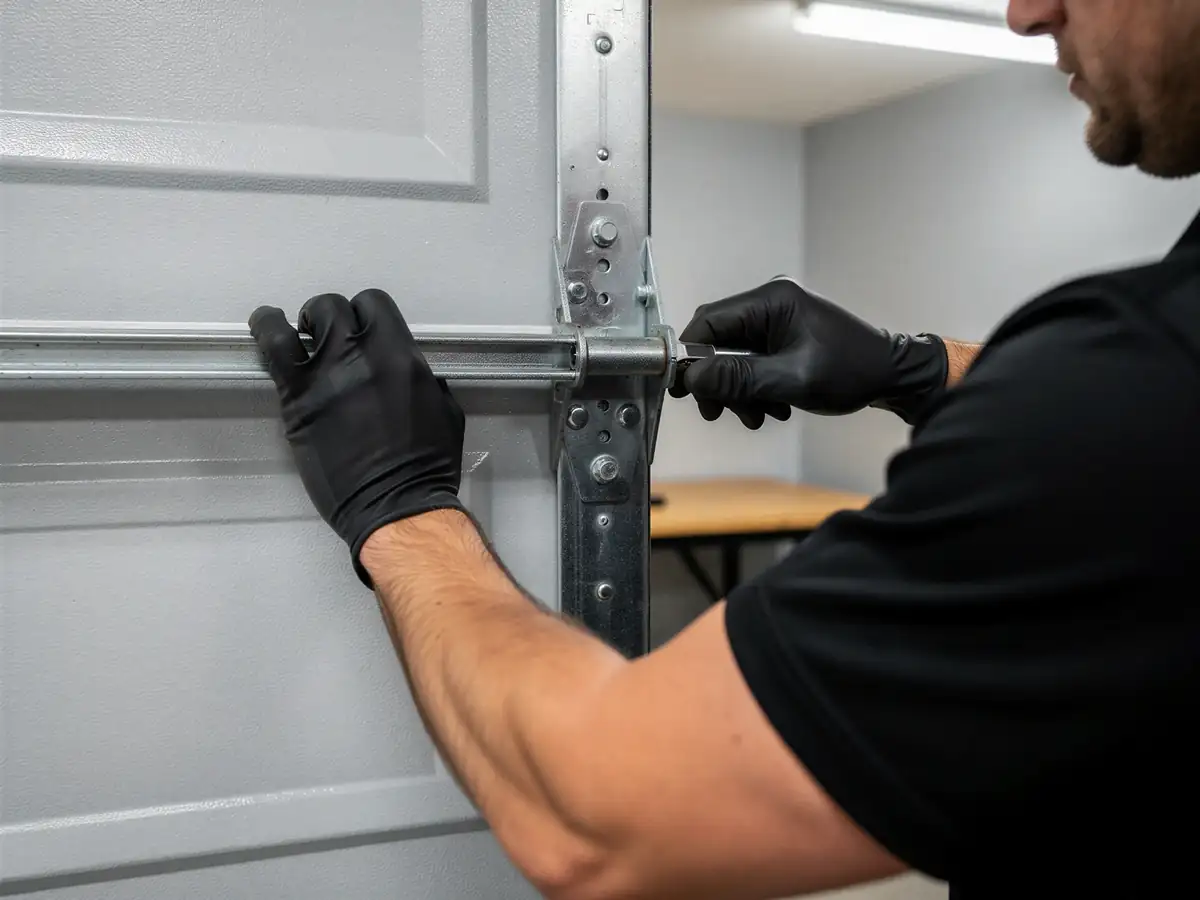
The most common call out of Bigfork is a door that reverses on its own a few inches off the floor, or won't close all the way and just sits there blinking its light. That's the photo-eye sensor on an original-era opener, either knocked out of alignment or corroded at the contacts after thirty winters. The second most common is a loud bang from the spring side of the door followed by a door that won't lift at all - a torsion spring letting go, which on a double door is a two-spring job almost always.
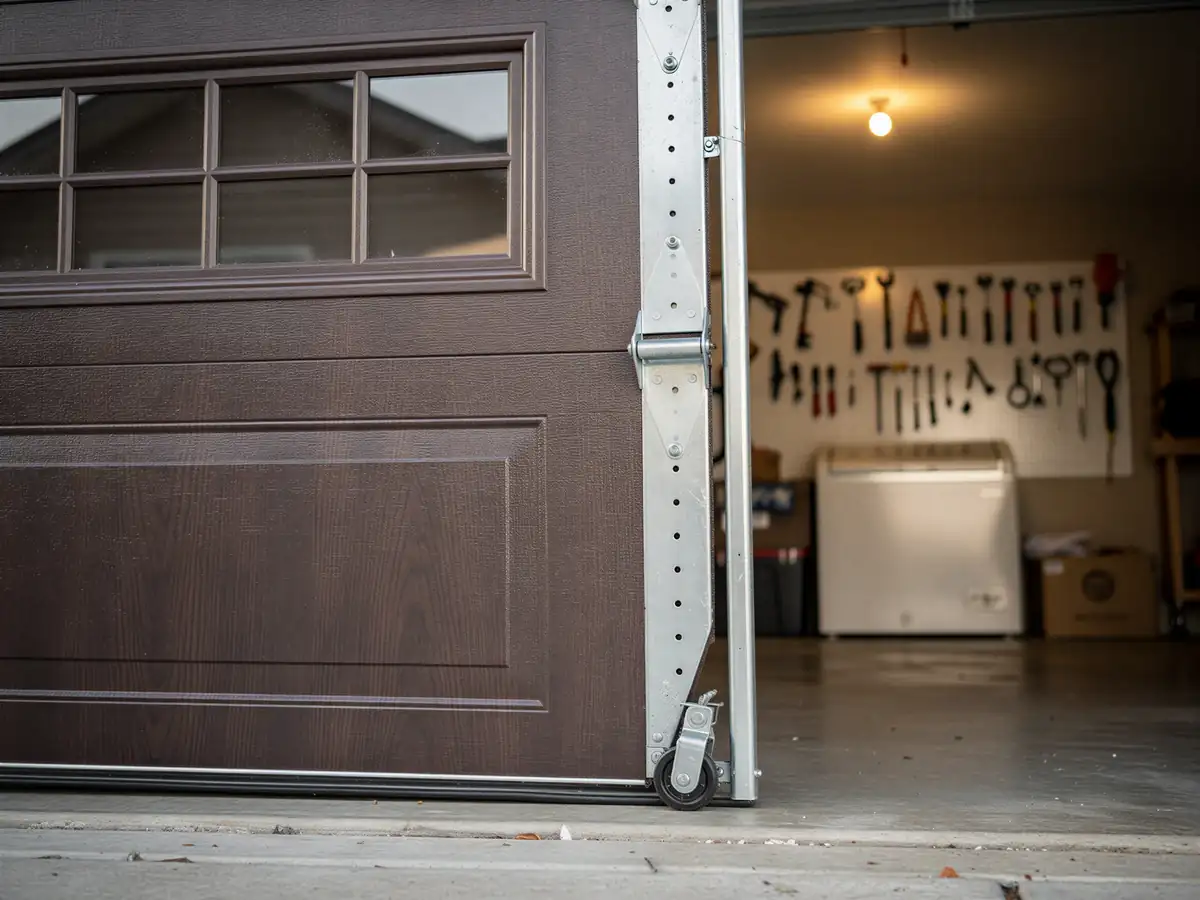
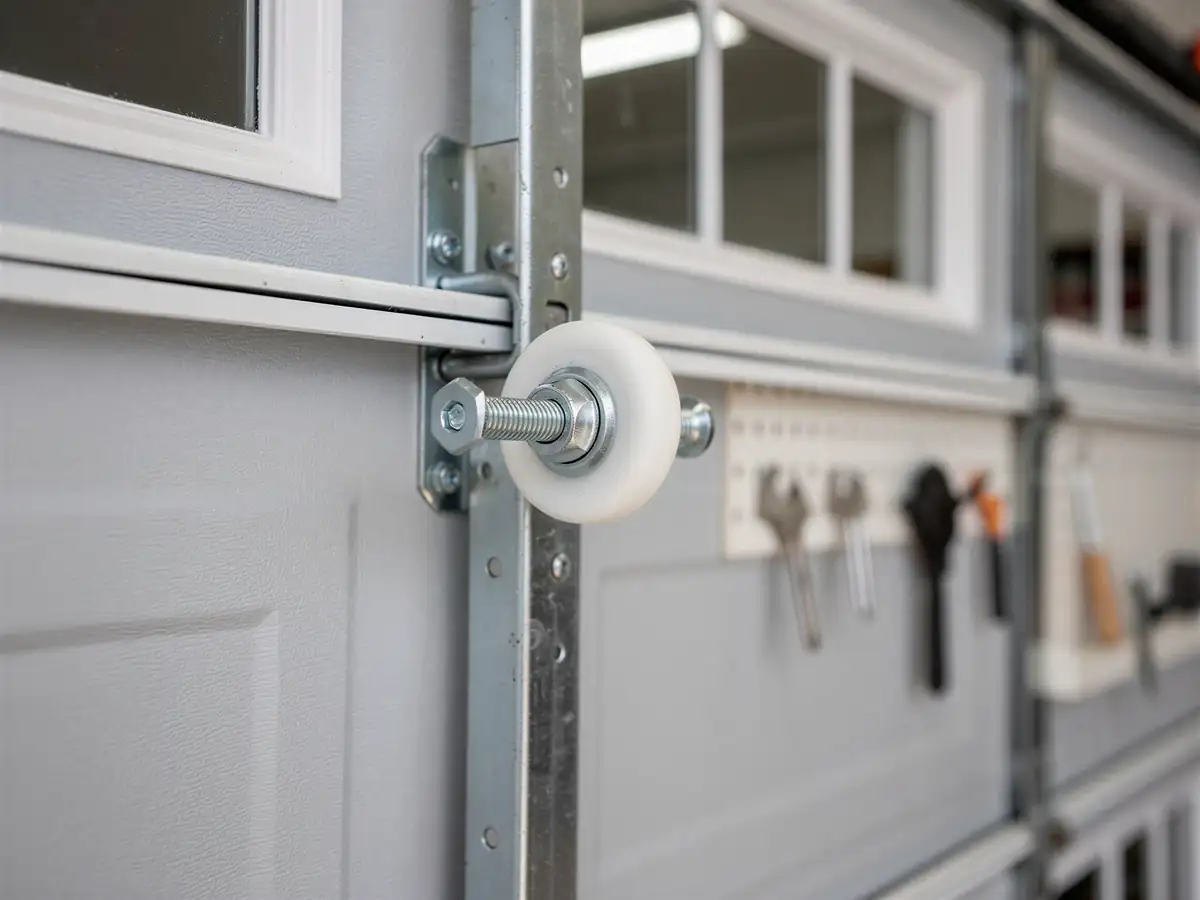
Colder-climate condensation plays a role too. Steel panels without a thermal break sweat on the inside face overnight, and that moisture finds its way to the bottom roller and the track. By morning, in a hard freeze, the roller's seized to the track and the opener either stalls or strips a gear trying to force it. This isn't a once-a-winter thing here; it's a recurring pattern on uninsulated single-layer doors, which is most of what went in during the building boom that produced Bigfork's current housing.
How We Fix It
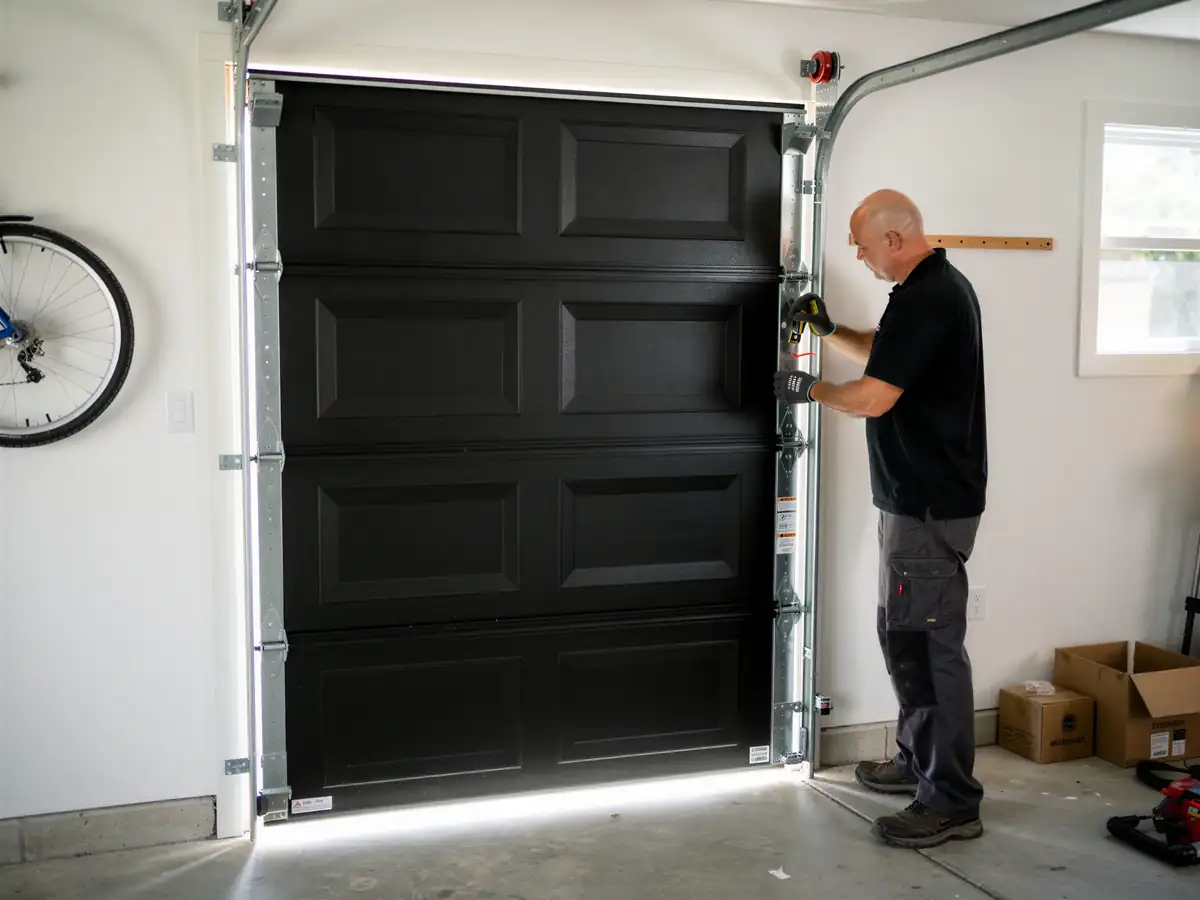
We come out from Kalispell, roughly 16 miles, so we don't carry a local response-time number for Bigfork - it's a drive, not a walk-up call. Once we're on site, the first thing we check on any mid-90s door is spring cycle wear and gear condition before touching the sensors, because a misaligned sensor is often a symptom of a sagging spring pulling the whole door assembly out of square, not a sensor problem by itself.
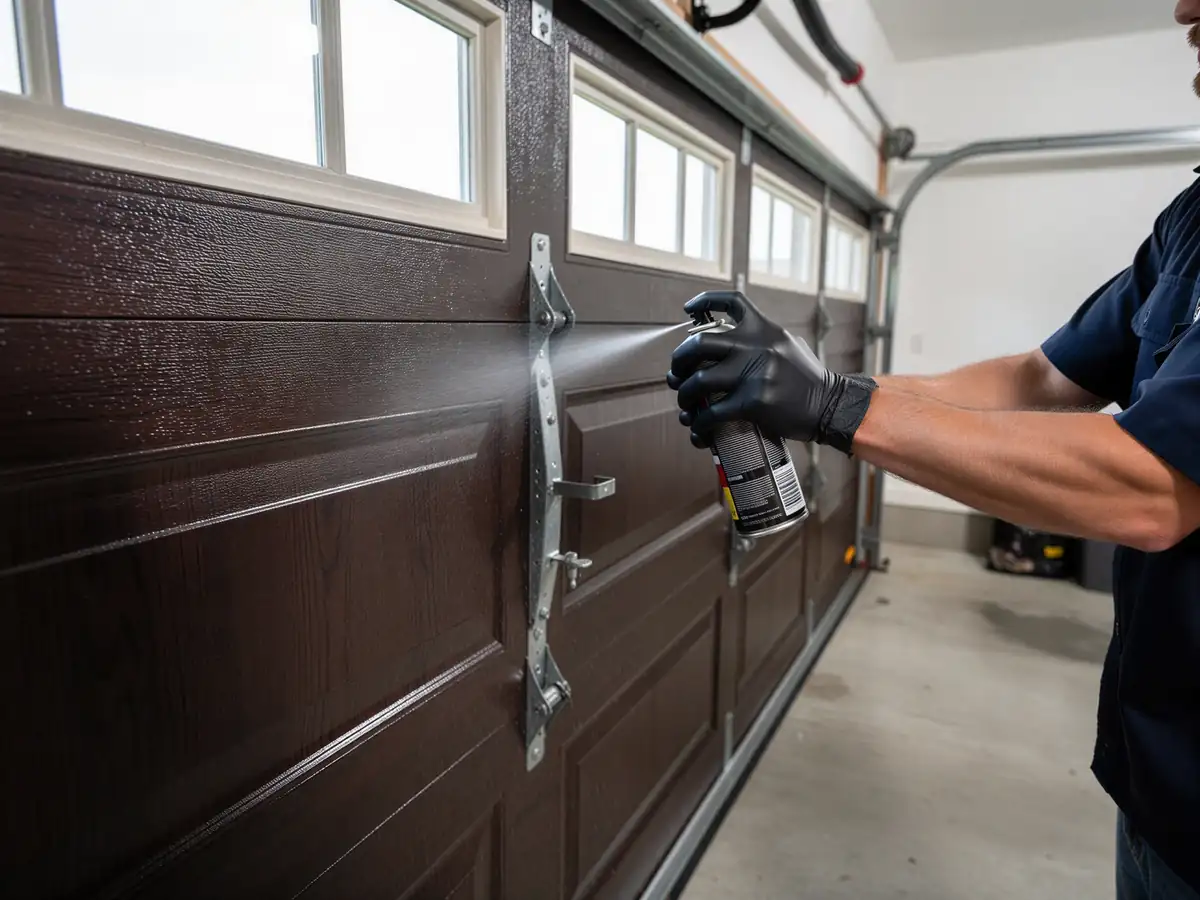
For the frozen-roller issue we see on original steel panels, the fix usually isn't a once-off thaw and lube. We'll tell you straight if the door's original 1994 panel has no insulation layer and is going to keep sweating every winter - in that case, replacing the panel with an insulated one costs less over five winters than repeated service calls to free a frozen roller. We don't push replacement on a door that still has life in it; if the spring and opener are sound, we fix what's broken and leave the rest alone.