What You Pay
We don't quote a number sight unseen, because roller jobs vary more than people expect
A single cracked nylon roller on a light single door is a small job. A full set of eight or ten rollers on a heavier double door, especially if the track has to come off to get the old ones out, takes longer and costs more. Steel rollers with sealed bearings run higher than open nylon ones, but they last longer in cold garages where lubricant thickens and dirt gets ground into the track.
What moves the price on most calls we take across the Kalispell service area
How many rollers are shot versus just noisy, whether the track is bent (which often happens alongside bad rollers, not instead of them), and whether we're already on site for an opener or spring call and can knock the rollers out at the same time. If you're calling around for quotes, ask what roller type they're actually installing - nylon and steel are not interchangeable in price or lifespan, and a quote that doesn't specify which one is a quote you can't compare.
One honest limit: if your rollers are original to a door from the 1980s or 90s and the track is pitted or rusted through
Roller replacement alone won't fix the noise. We'll tell you that on site rather than sell you rollers that won't solve the problem.
Stocked Parts
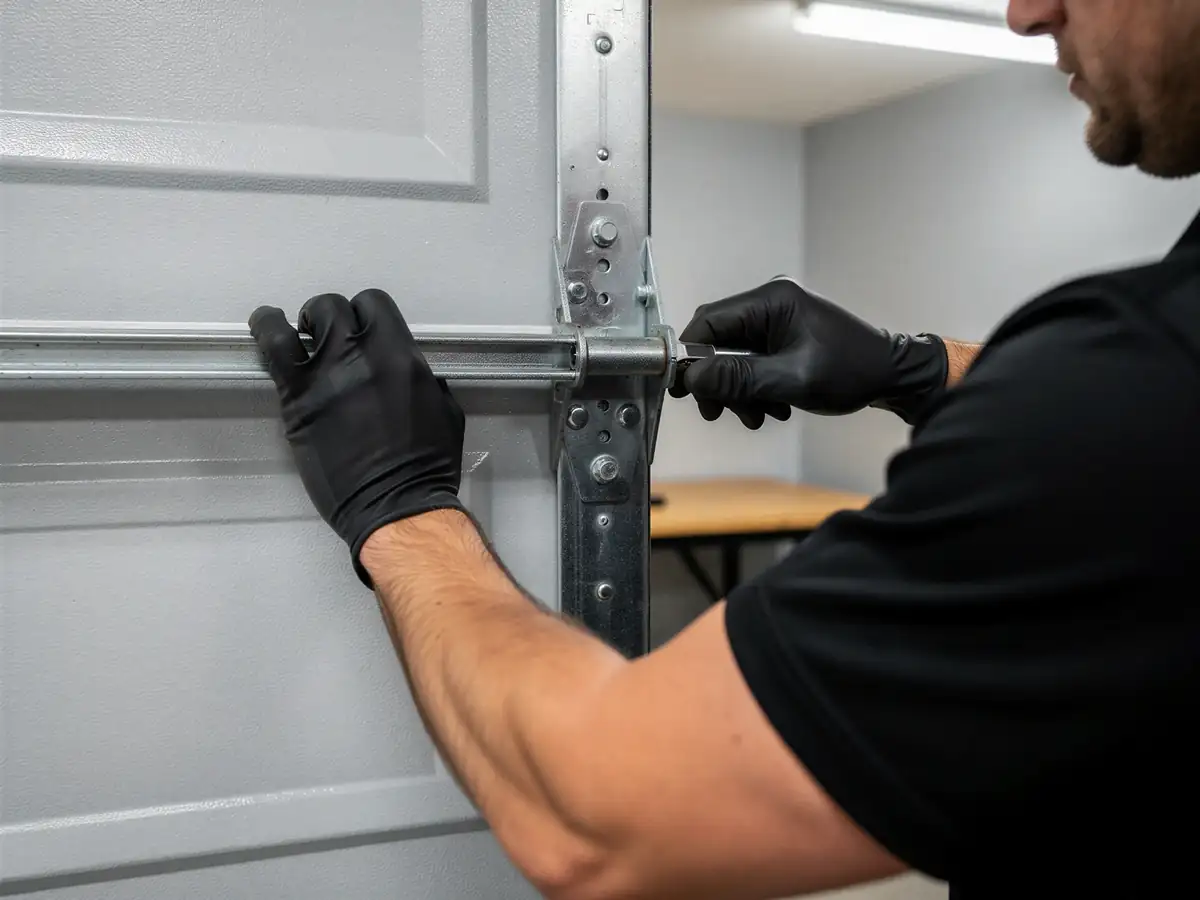
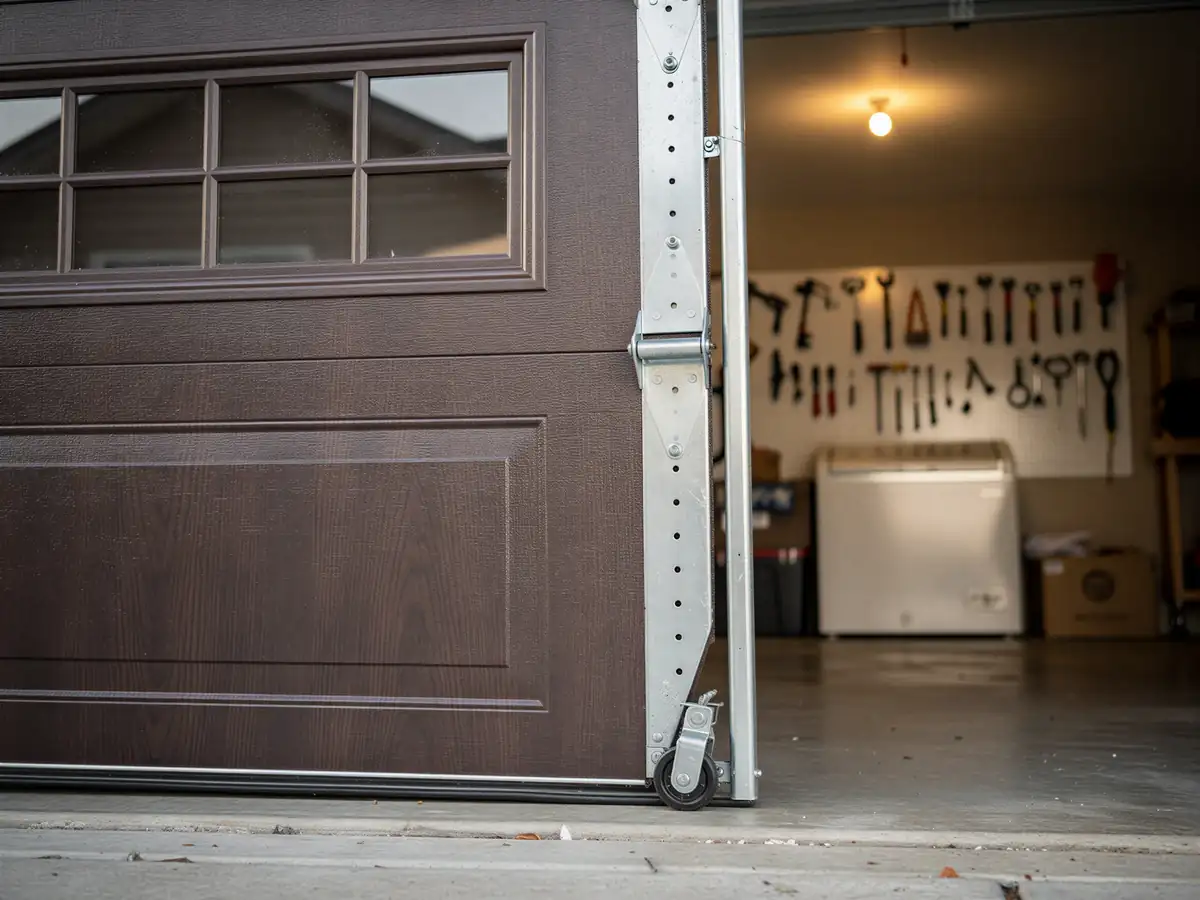
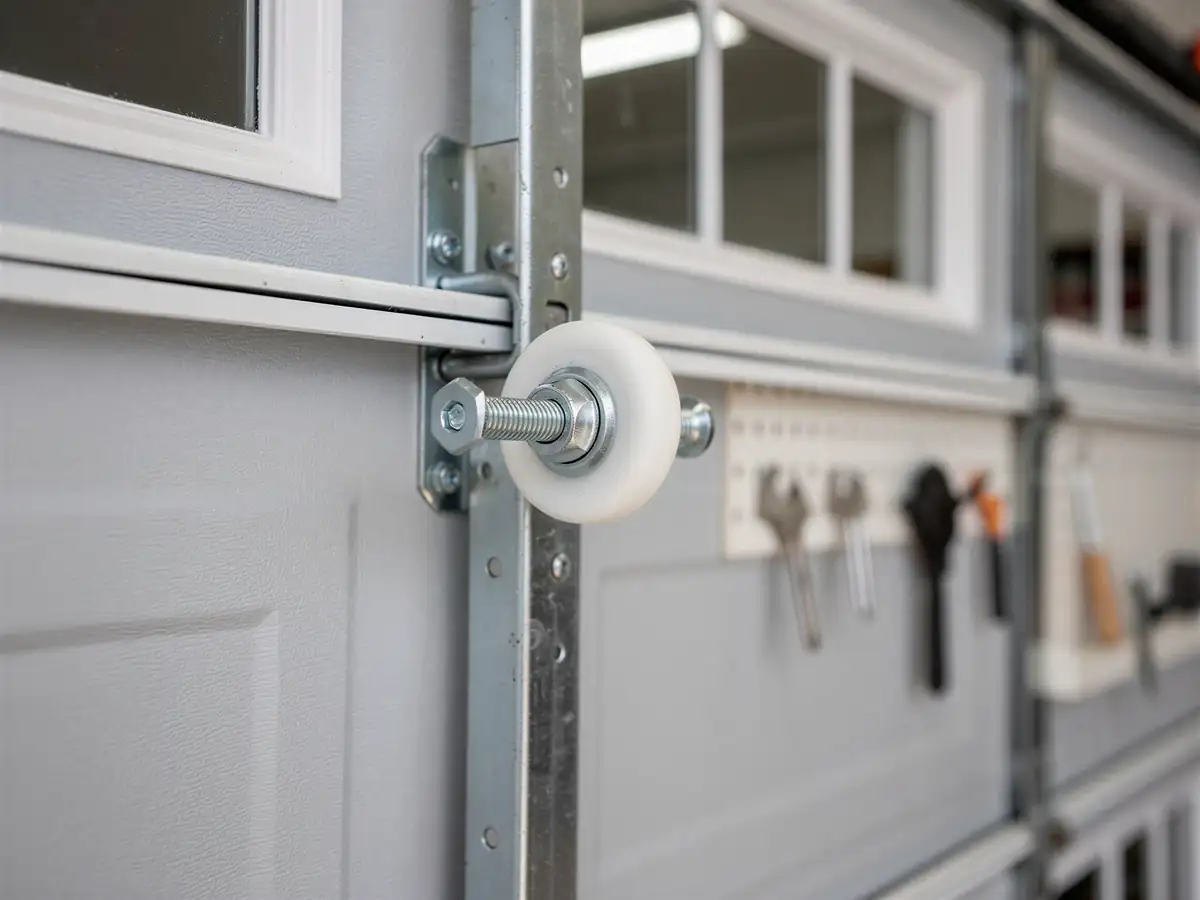
We carry the two roller types that cover nearly every door still running in this area: 10-ball sealed steel rollers with 4-inch or 7-inch stems, and nylon rollers in the same stem lengths. Across the roughly 8,000 owner-occupied houses in the service area, door hardware splits pretty evenly between builder-grade nylon from the original install and upgraded steel from a prior repair, so we stock both rather than betting on one.
What we don't stock on the truck: specialty rollers for high-cycle commercial doors or odd stem lengths from older imported hardware. Those get ordered, and we'll tell you up front if your door needs one so you're not waiting on-site for a part that isn't coming that day.
We also carry the brackets and short sections of track that roller jobs commonly need alongside the rollers themselves - a bent bracket is often what killed the roller in the first place, and swapping the roller without the bracket just repeats the failure in a few months.
The Symptom
The classic sign is a grinding or popping noise as the door travels, worst right at the bend where the vertical track curves into the horizontal section near the ceiling. Rollers that are cracked or flat-spotted don't roll smoothly through that curve anymore - they catch, which is the noise you're hearing. A door that used to run quiet and now sounds like it's dragging gravel is almost always rollers, not the opener.
Another tell: the door seems to hesitate or jerk at one specific point in the travel every single time, rather than making noise evenly the whole way up. That's usually one bad roller at a fixed spot in the track, not general wear across all of them.
If the noise is accompanied by the door sitting unevenly in the opening, or one side dragging lower than the other, stop running it. That can mean a roller has come off the track entirely, and running the door that way stresses the opener and the track mounting brackets.
Why This Fails Locally
A large share of the housing stock across the Kalispell service area went up between 1979 and 2003
With the median build year around 1988. That generation of garage doors shipped with plastic or basic nylon rollers as standard equipment, not an upgrade - builders weren't speccing steel rollers on spec-built homes in that era. Thirty-plus years on, those original rollers are well past the end of their service life across the nine named communities in this area, from Evergreen and Kila out to Somers, Columbia Falls, Lakeside, Whitefish, Bigfork, Hungry Horse, and Marion.
The cold makes it worse, not just the age
This area sits in a severe cold climate band, and nylon rollers get brittle in sustained low temperatures the way rubber gaskets do. A roller that was merely worn in September can crack outright on a single-digit January morning, because the plastic loses flex right when the door is working hardest against frozen weatherstripping and stiff cable tension. That's why we see a real spike in roller failures through the coldest stretch of winter, concentrated in doors old enough to still be running their original hardware.