How We Fix It
The fault almost always starts the same way
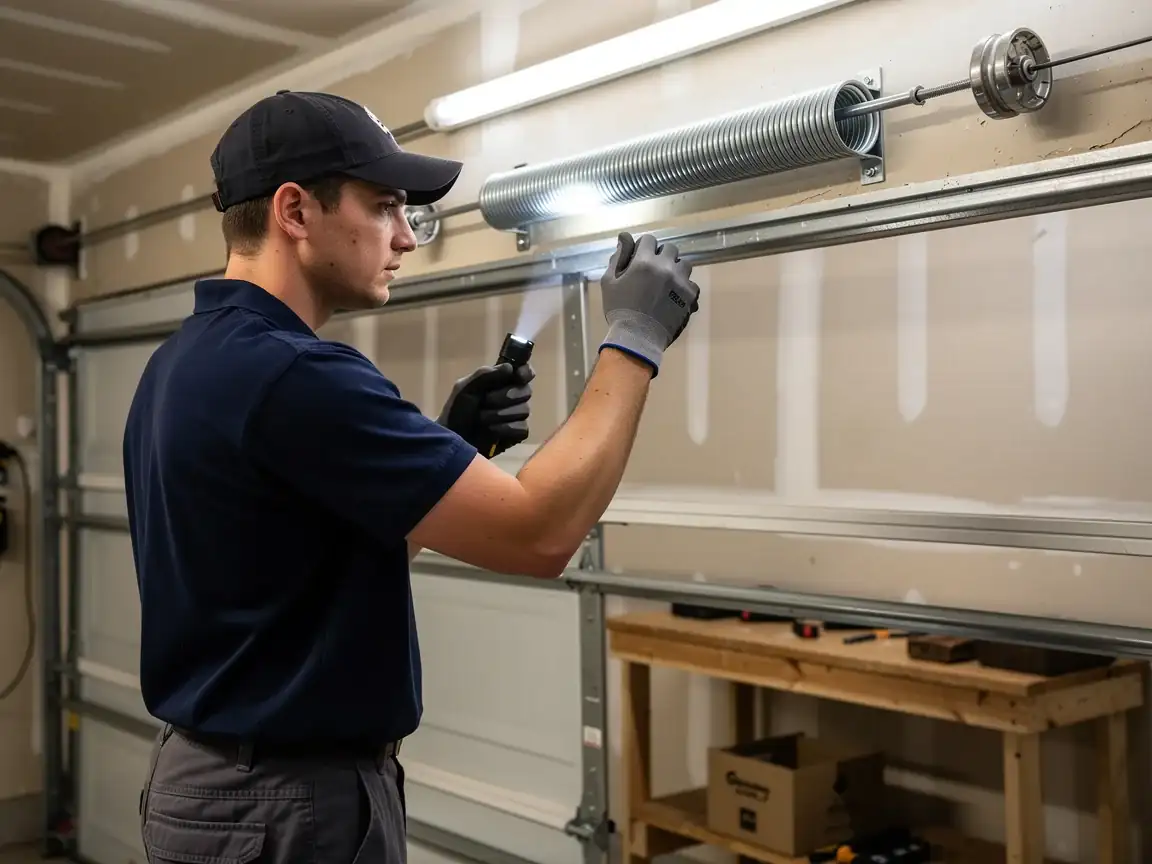
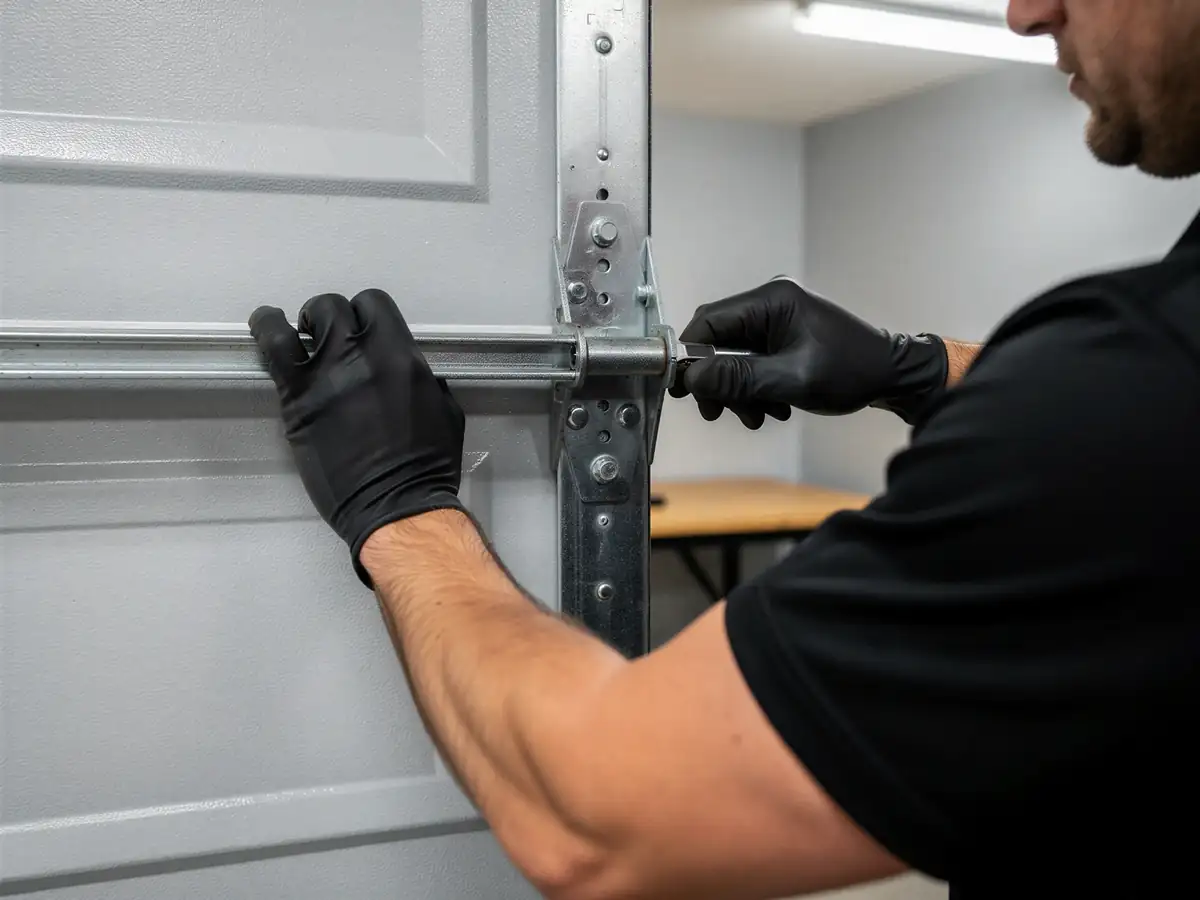
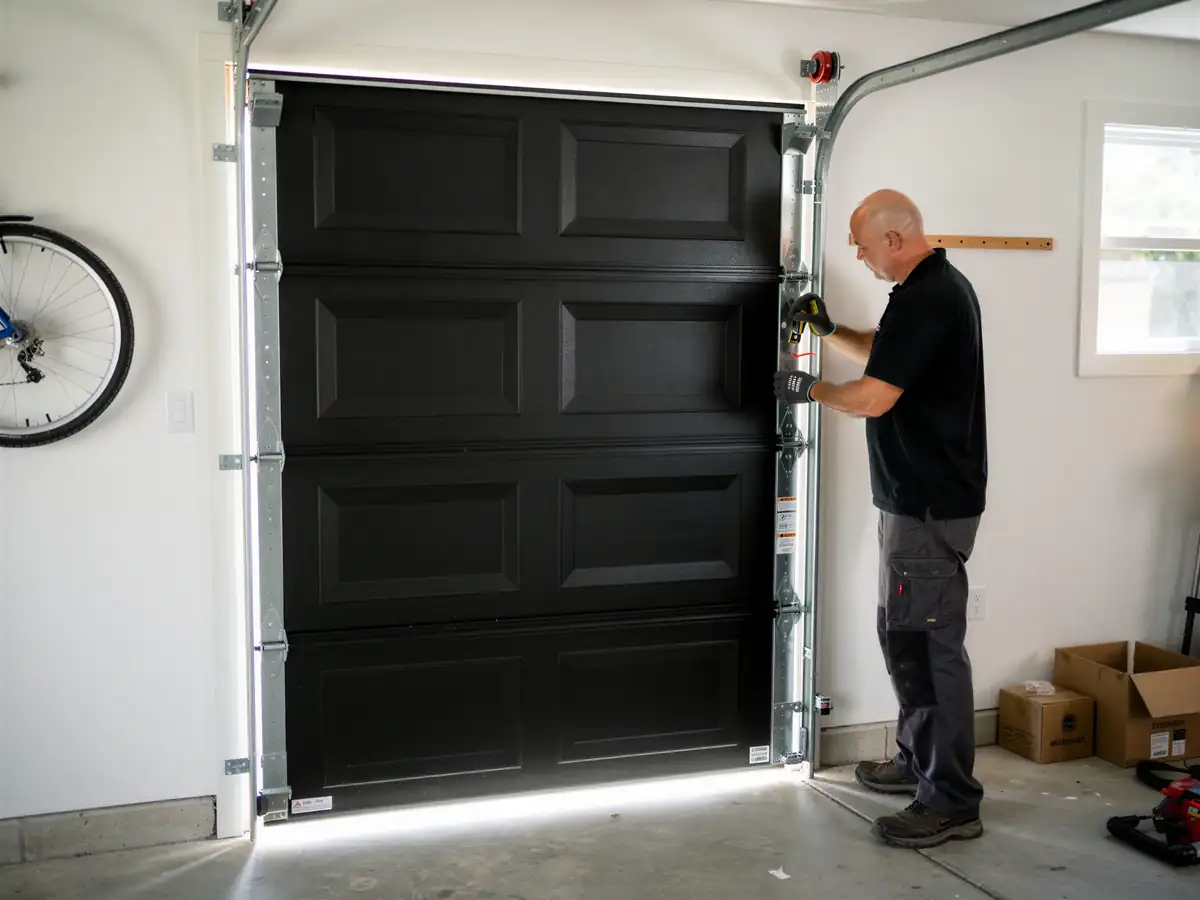
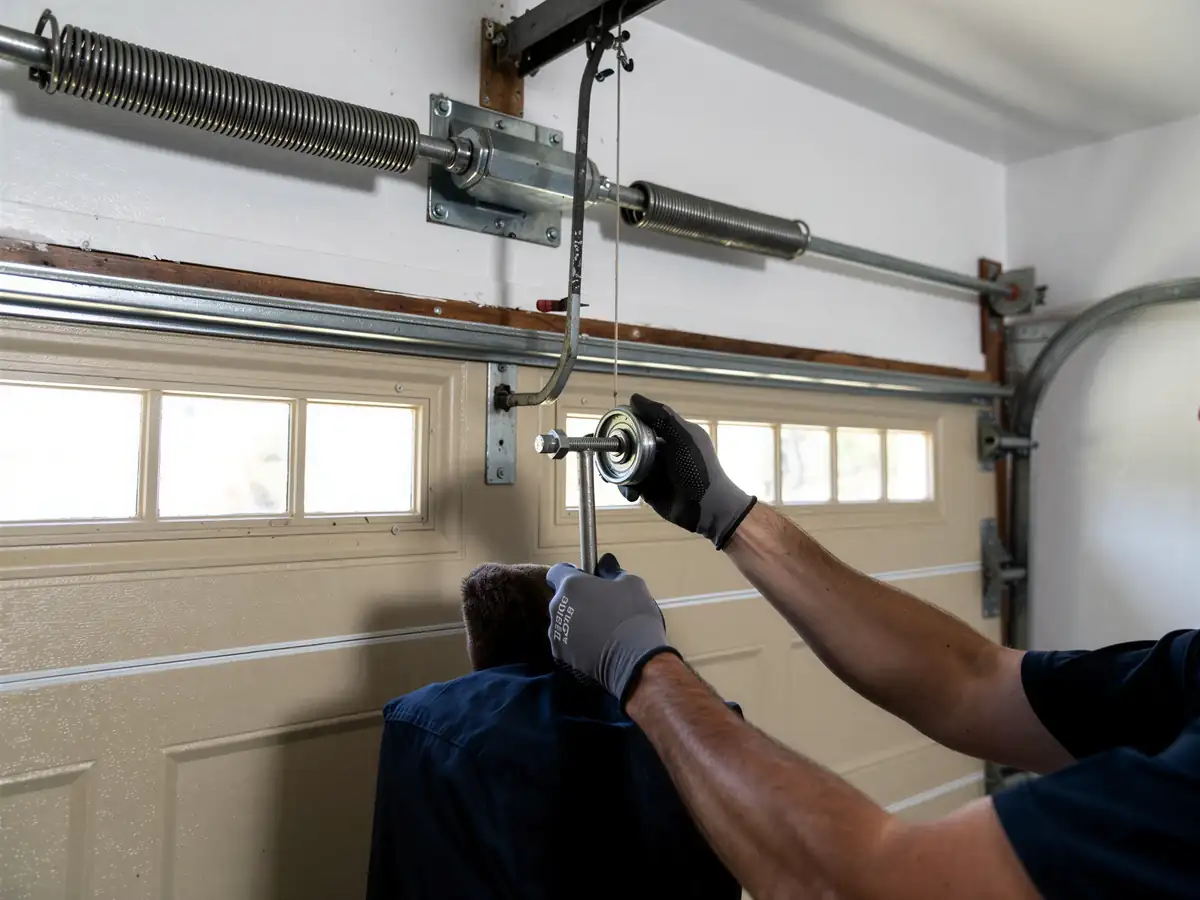
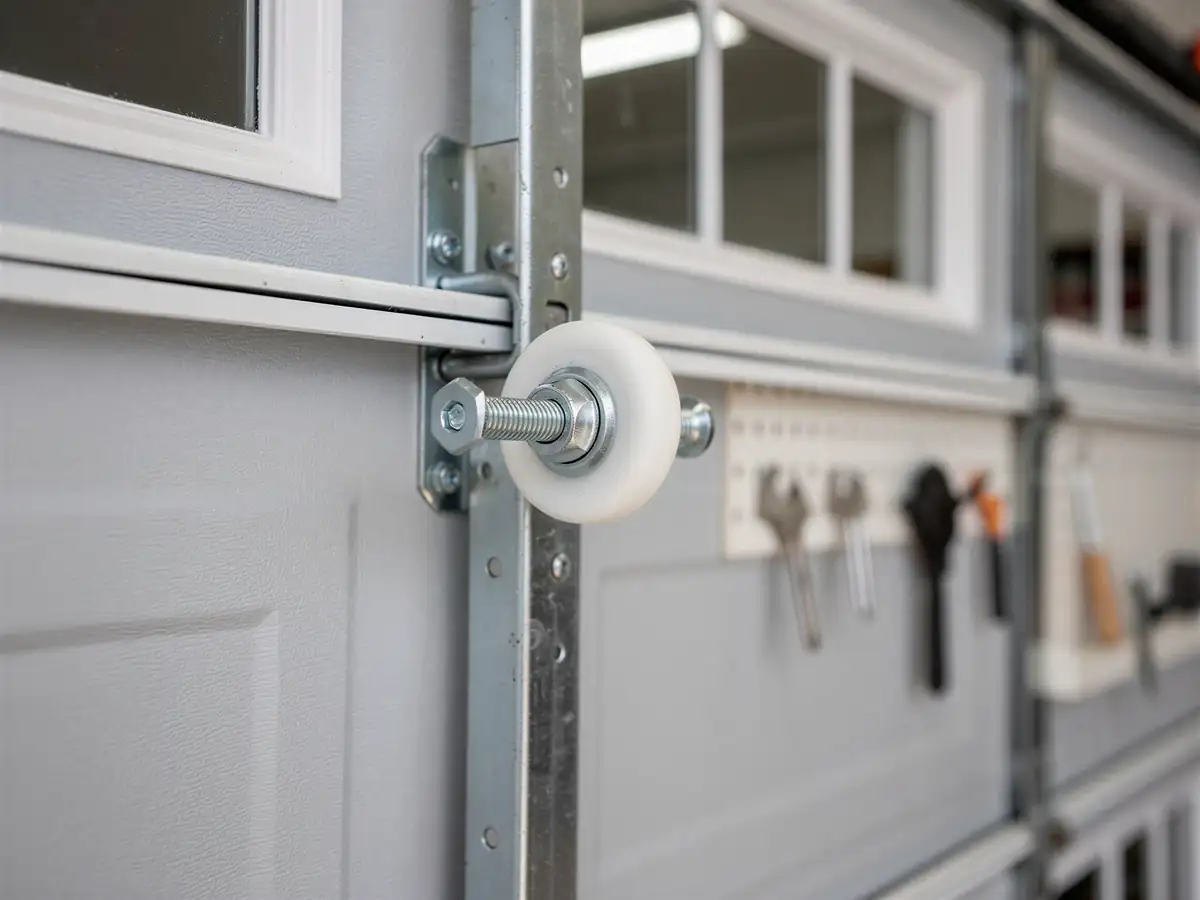
A steel roller that's been riding bare in the track since the house went up starts to flat-spot, and the door stops gliding and starts grinding. We pull the door down on the winding bars, pull the roller brackets off the track one at a time so the section stays supported, and swap the worn steel wheel for a sealed nylon roller with a stainless stem. No grease fitting to maintain after that, which matters here.
Most of Hungry Horse went up around 1988
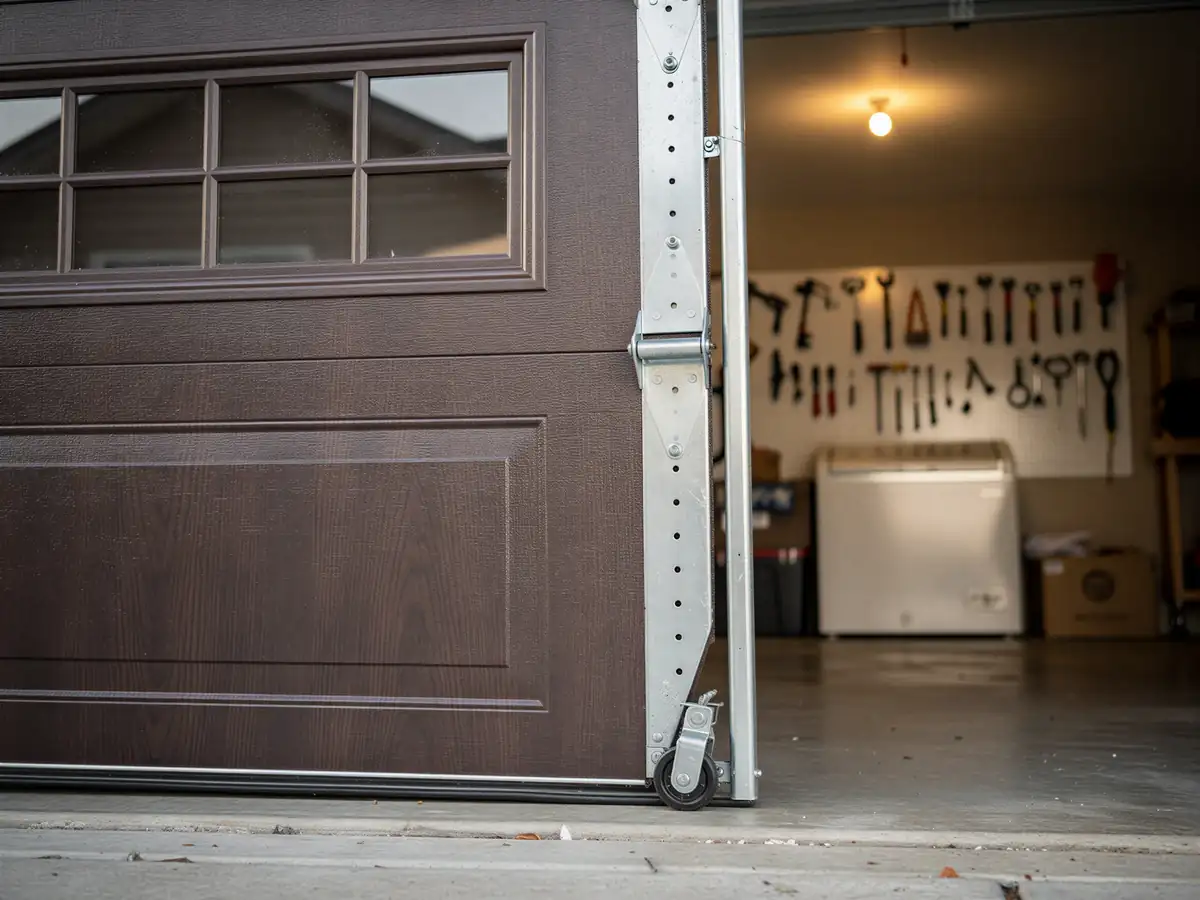
Back when steel rollers running directly in a painted steel track were still the standard builder-grade part. That track geometry is narrower than what ships on new doors today, so we check the gap before we hang new rollers rather than assuming a modern roller drops straight in. On a door this old we also look at the hinges the rollers sit in - if those are bent or the holes are stretched out, a new roller just wears unevenly again inside a year.
We don't replace a track section on a roller call unless it's actually bent
If the track is straight, a roller swap is a one-visit job. If it's bent badly enough that the door walks sideways, that's a different repair and we'll say so before we start, not after.
Stocked Parts
We stock sealed nylon rollers with stainless steel stems on the truck before we leave Kalispell, because there's no parts counter in Hungry Horse to run back to if the wrong size turns up. The 1988-era track width common across these houses takes a standard stem length, so that's what rides out on every run - but a handful of doors from the same build years used an extended-stem roller for a thicker jamb bracket, and we carry a few of those too rather than finding out on site.
What we don't carry out is every roller bearing grade made. Sealed nylon covers the vast majority of residential doors in this climate band, and it's what we install unless you specifically want steel rollers matched to an existing commercial-grade door, which is rare out here. If your door needs something outside that, we'll tell you what we'd need to order rather than fit a part that's close but wrong.
Cables, hinges, and end bearings that get damaged pulling a seized roller out come off the same truck. A roller job that turns up a cracked hinge doesn't need a second trip - it needs five more minutes with a part we already have in hand.
Booking a Visit
Hungry Horse is about 17 miles from our shop in Kalispell, and we route roller calls out there the same way we route calls to Evergreen, Somers, or Columbia Falls - as a scheduled stop, not a dispatch-on-demand run. When you call, tell us the door is grinding, dragging, or jumping in the track; that's usually enough for us to bring the right roller stem length without a separate look-first visit.
We don't keep a branch or a drop box in Hungry Horse - every job here is a truck coming from Kalispell, so the appointment window reflects that drive rather than a same-neighborhood response. If you're flexible on the day, we can often slot a Hungry Horse roller job alongside another call along the same stretch of road, which tends to get you on the schedule sooner.
Bring us the make of the door if you have it (often stamped on the end bracket near the top roller) and tell us roughly how old the house is. For a 1988-built house, we're already planning on the narrower track and bringing the standard stem length rather than guessing on arrival.
The Symptom
The giveaway isn't usually a door that won't open
It's a door that still opens but sounds wrong doing it - a grinding or clicking that gets louder as the door moves, worse right at the bend where the horizontal track turns up toward the ceiling. That's the roller losing its round shape as the steel wheel wears flat on one side, and it's the point that takes the most load every single cycle.
Cold makes it worse here
Hungry Horse sits in a severe-cold climate band, and the grease packed into an original steel roller's bearing stiffens hard in low temperatures, so the door drags getting started in the morning even before the roller itself has failed outright. Owners often blame the opener for this, and the opener strains trying to pull a door that's actually fighting a stiff, worn roller.
Left alone, a flat-spotted roller eventually chews a groove into the track itself
And at that point you're not buying rollers anymore - you're buying track too. Catching the noise early, before the door starts jumping or binding, is the difference between a roller swap and a bigger job.