Where This Job Goes Sideways
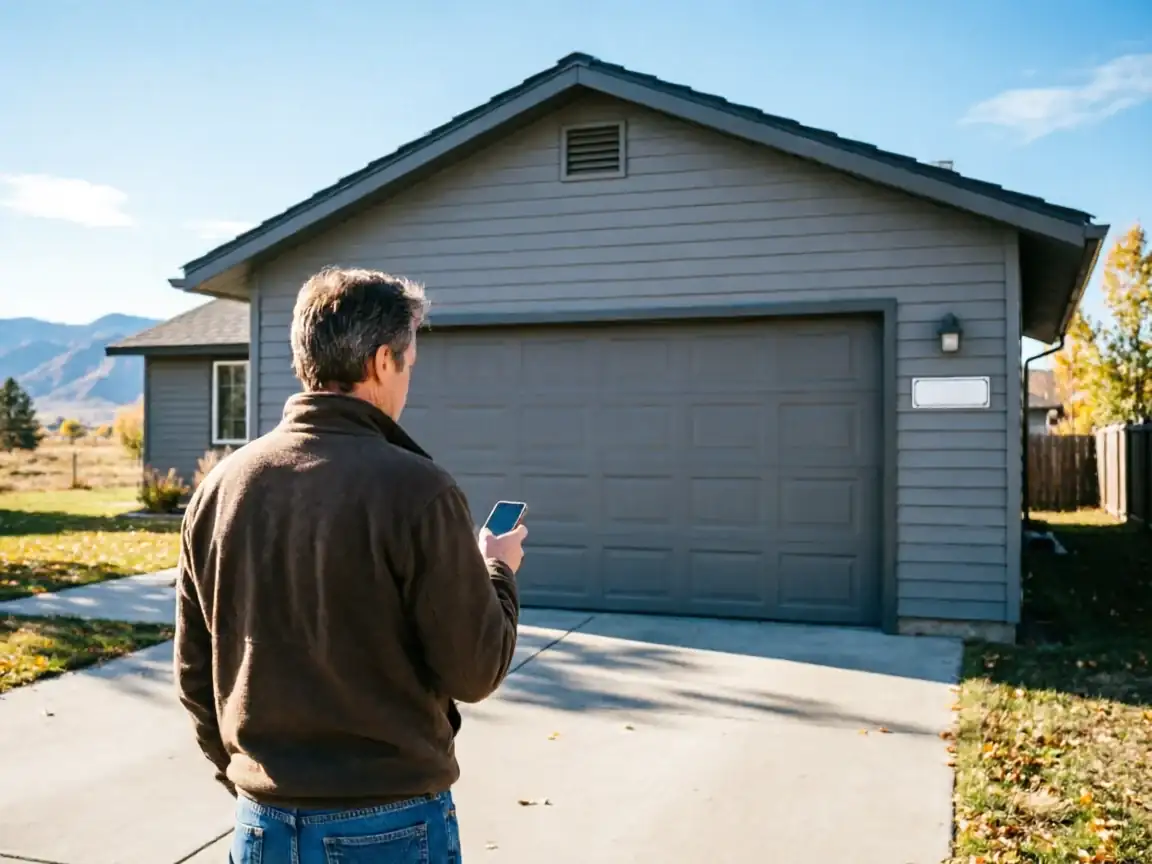
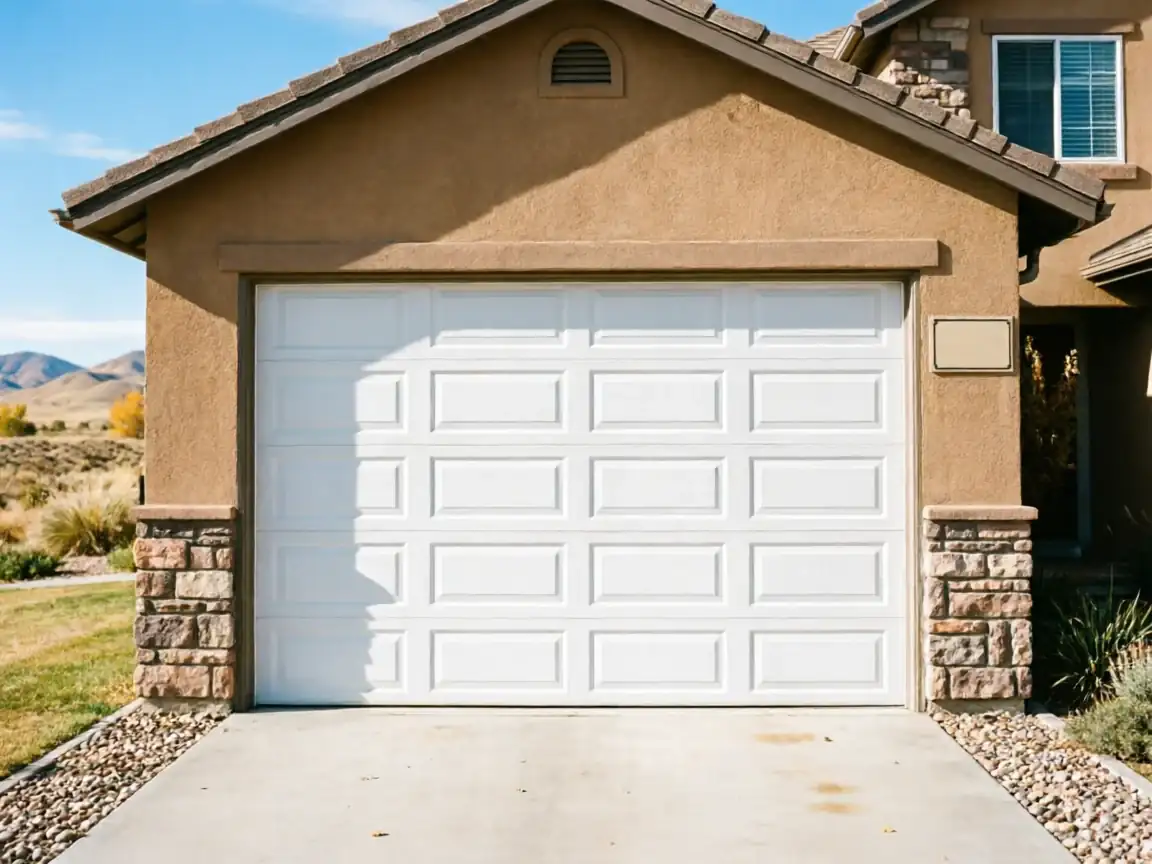
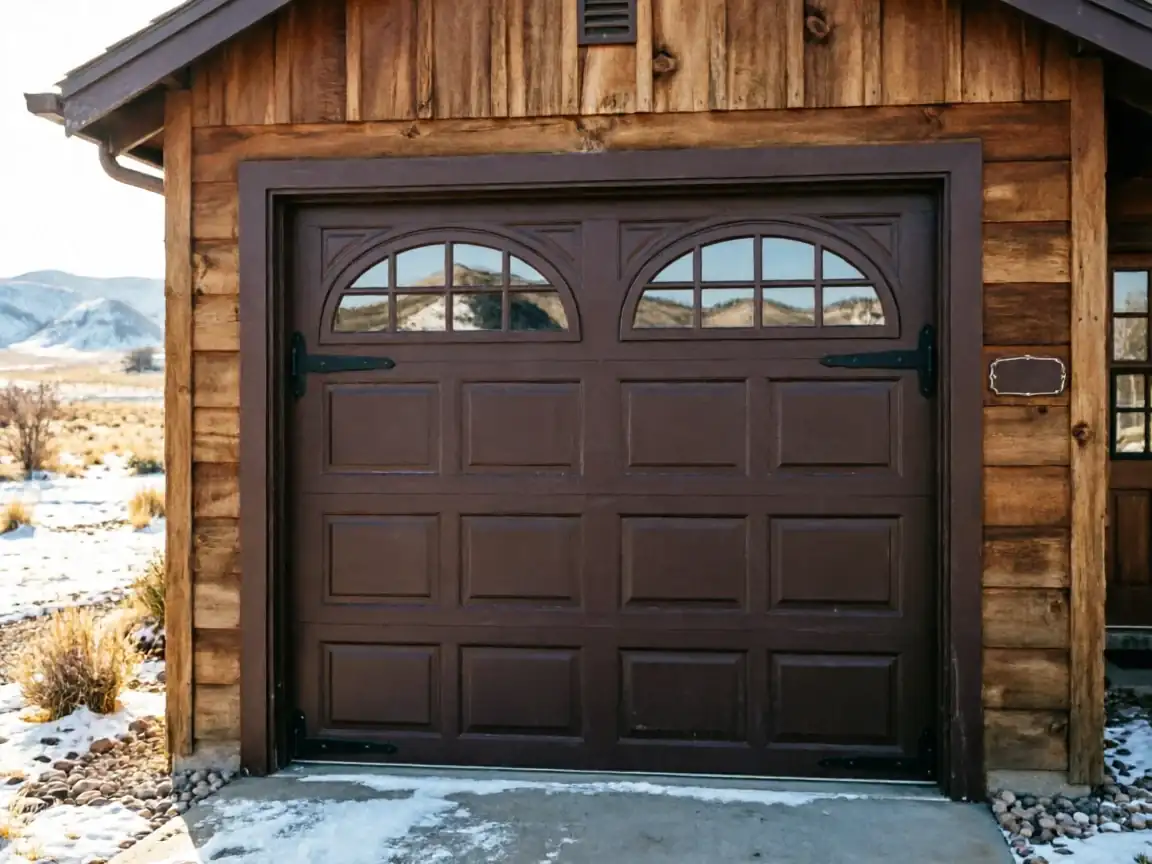
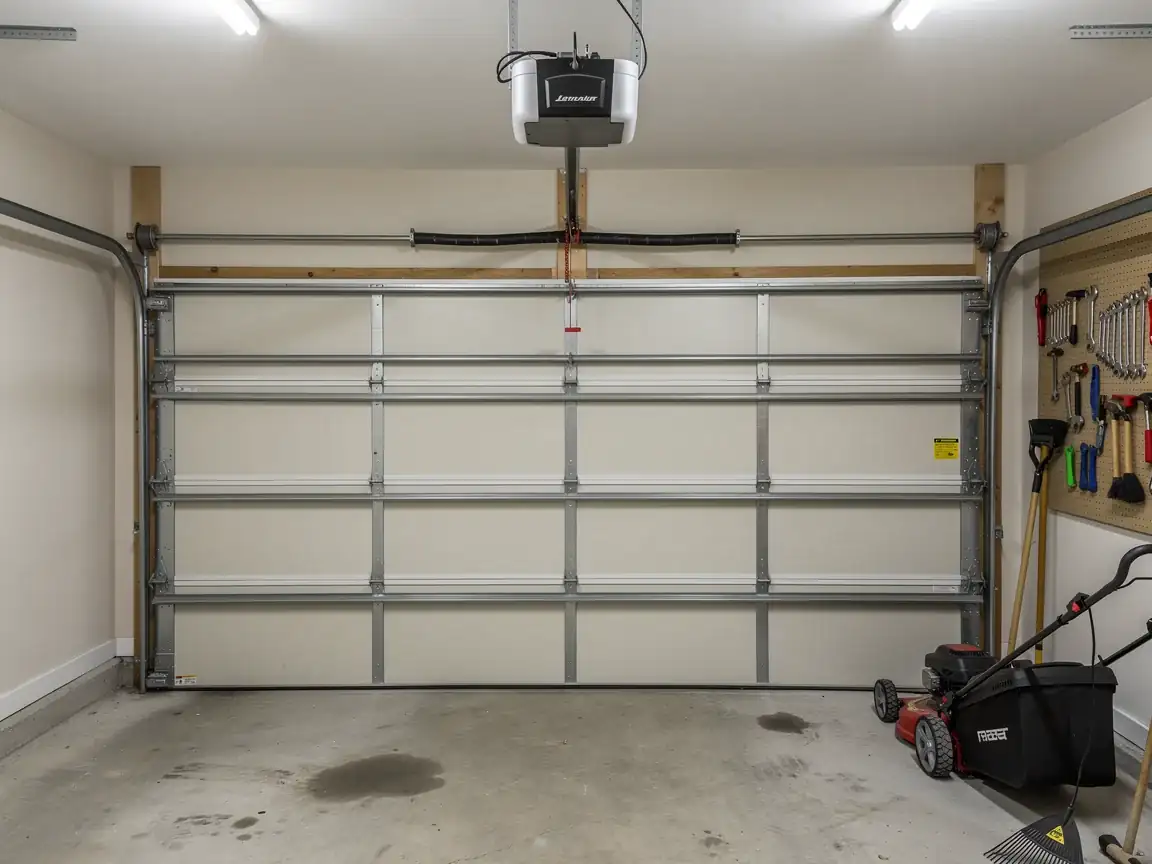
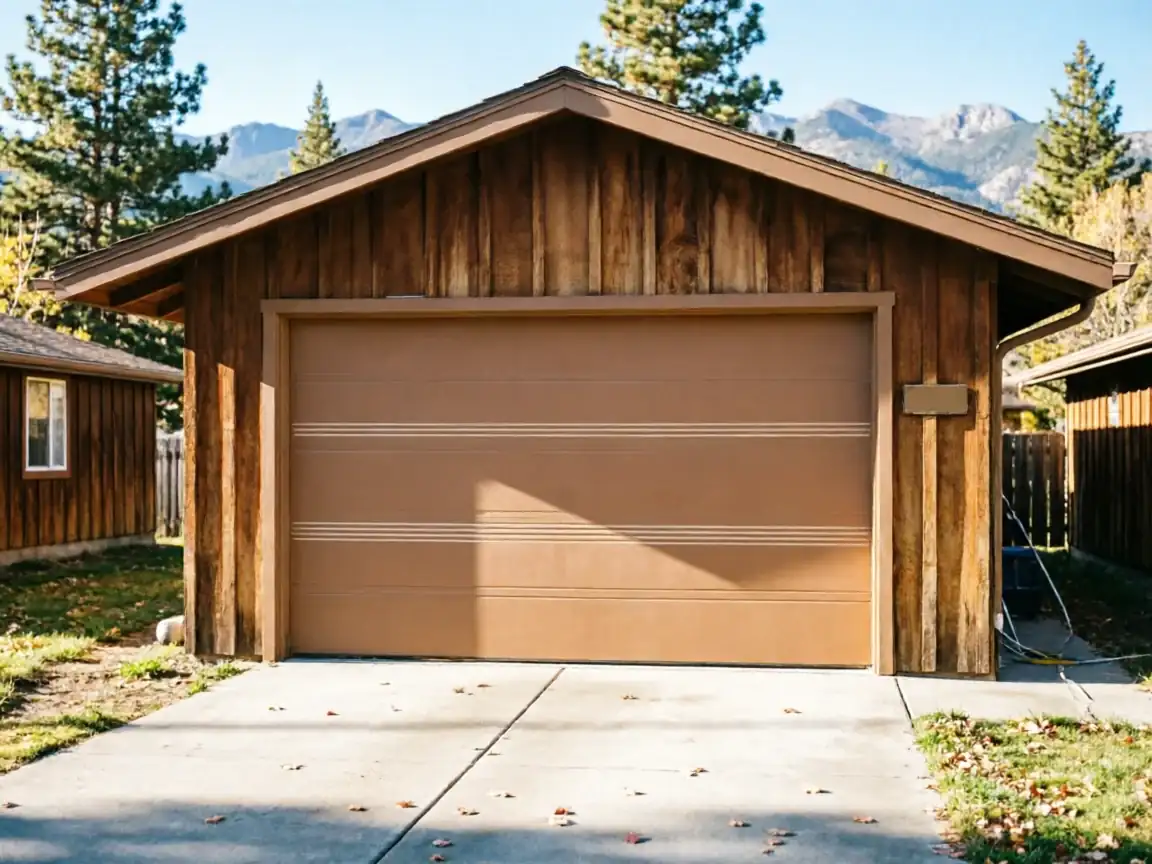
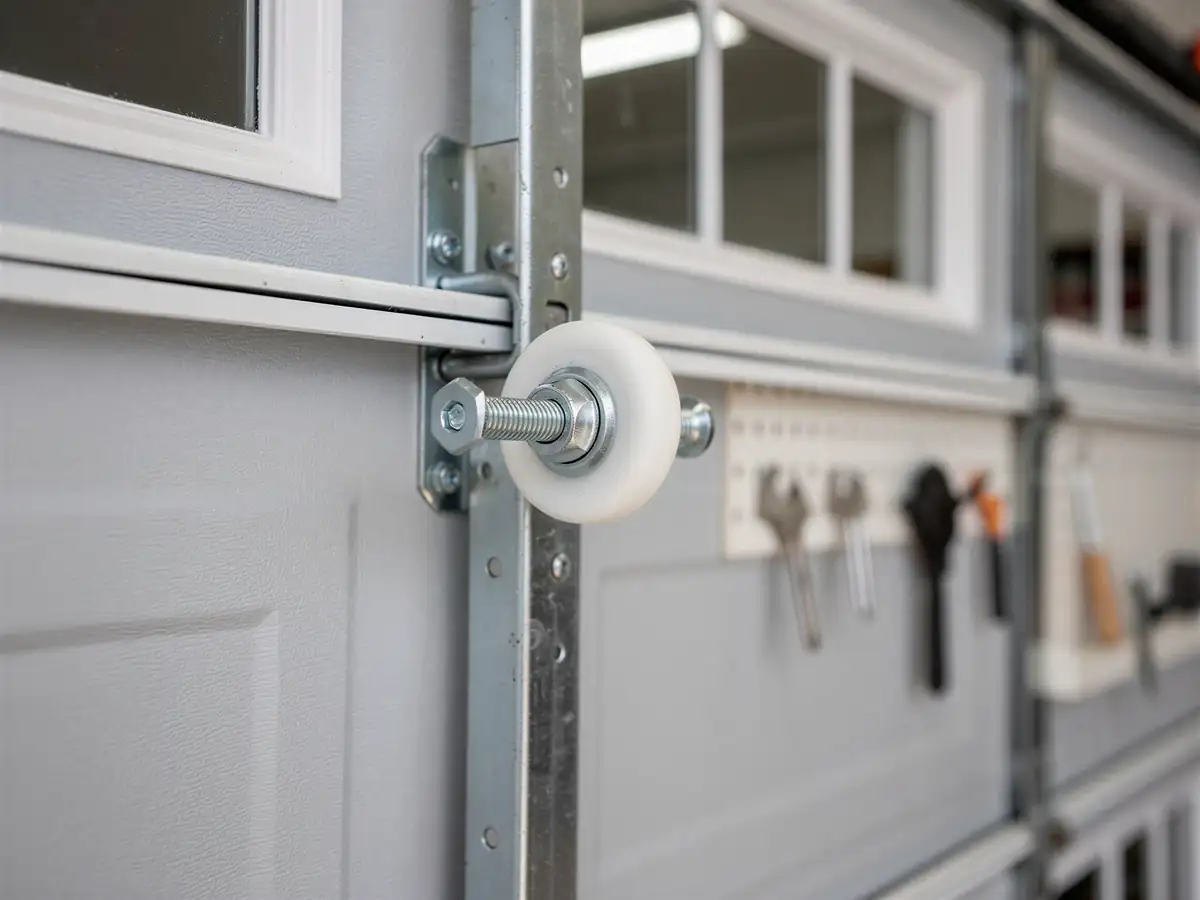
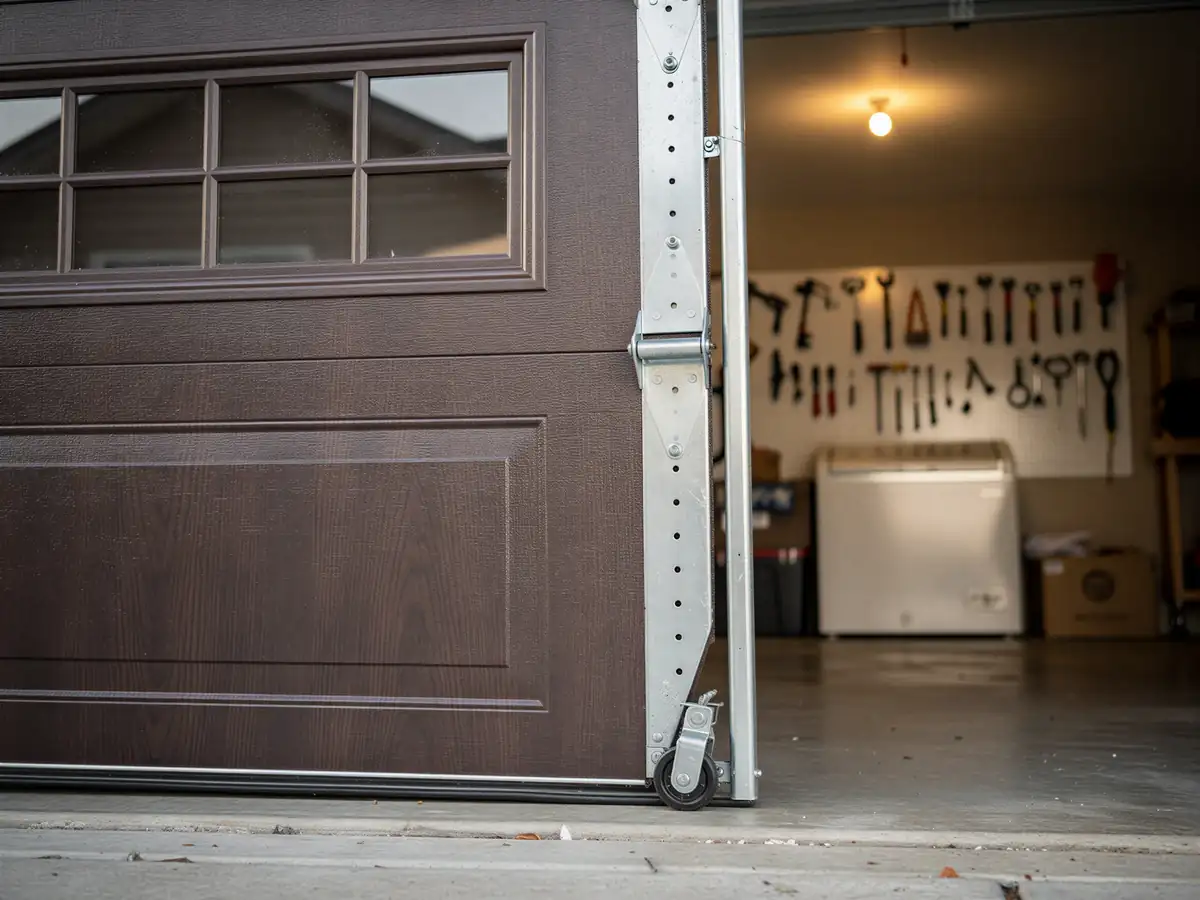
Houses in this part of Evergreen mostly went up around 1979, which puts the original garage door hardware right at the tail end of an era before galvanized track and nylon rollers became the standard fit. A lot of that original steel track has been knocked slightly out of parallel over the decades, and it holds until one hard freeze and one hit - a bumper, a stuck panel, a kid's bike - finally pops a roller clean out of the rail. Cold snaps do the rest. Ice builds up in the bottom few feet of track overnight, and when the door tries to close on an iced rail, it binds instead of rolling, torques sideways, and jumps the track. That combination - aging steel track plus hard freeze - is the single most common off-track call we get from this side of the valley, and it's rarely a coincidence that it happens in January rather than June.
Doing It Yourself
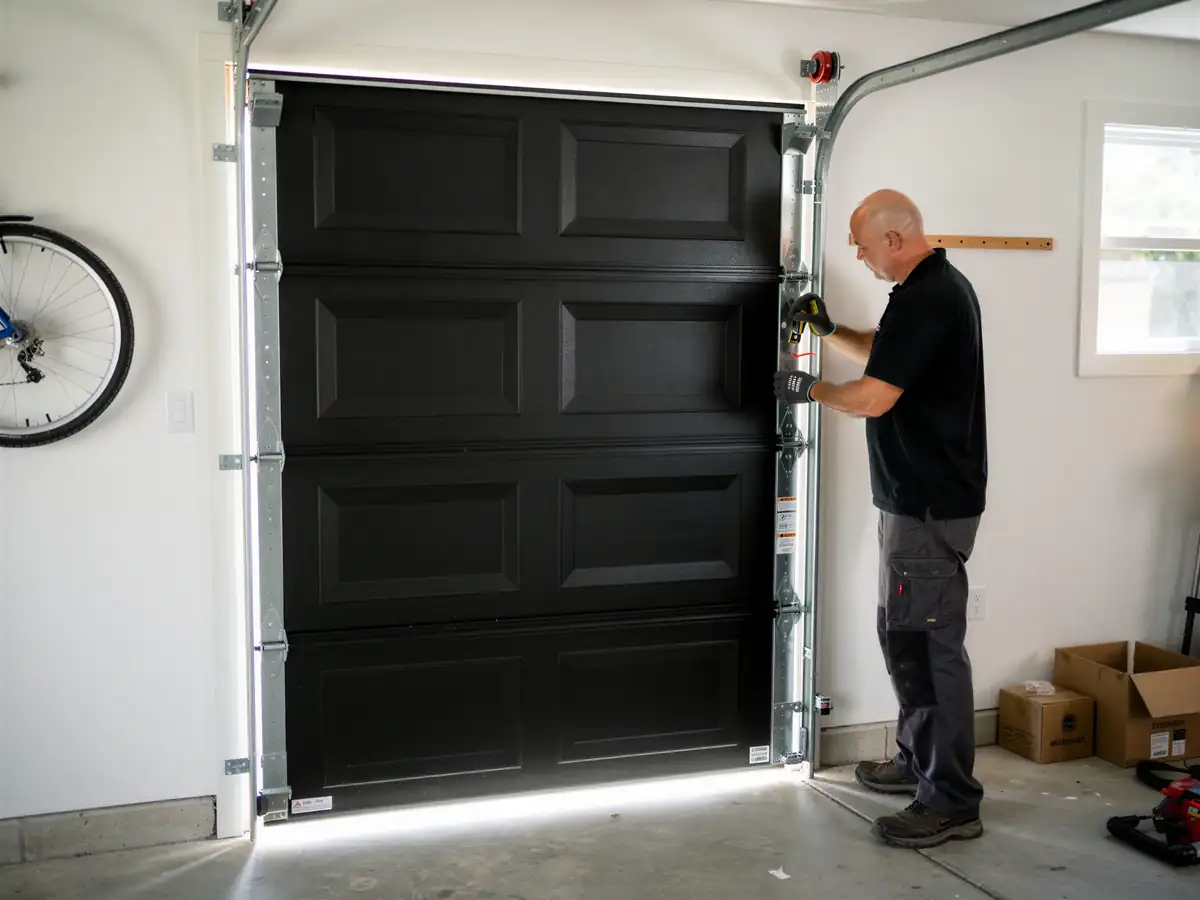
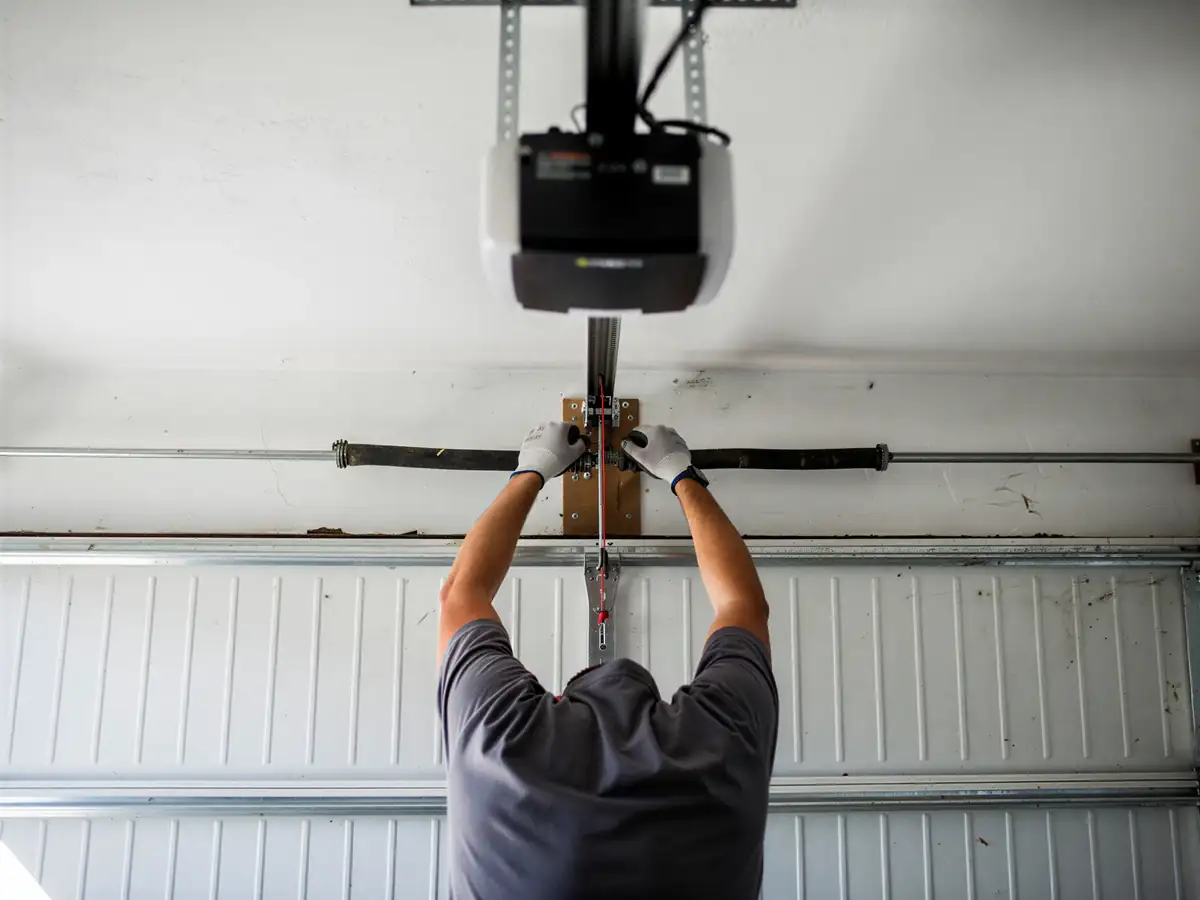
If one roller is out and the door is only leaning slightly in the opening, you can sometimes walk it back onto the track by hand with the opener disconnected - that's a reasonable thing to try. What you shouldn't try is forcing a door back onto bent track, or reaching in while the springs are still under tension, because a torsion spring on a door that's already off-balance can let go with enough force to break a hand. We also won't talk anyone through re-tensioning a spring over the phone - that's not a DIY limitation we're willing to bend on. If the track is visibly bowed or the bracket has pulled away from the jamb, stop and call. That's not us protecting the job; that's just where the risk outweighs the savings.
How We Fix It
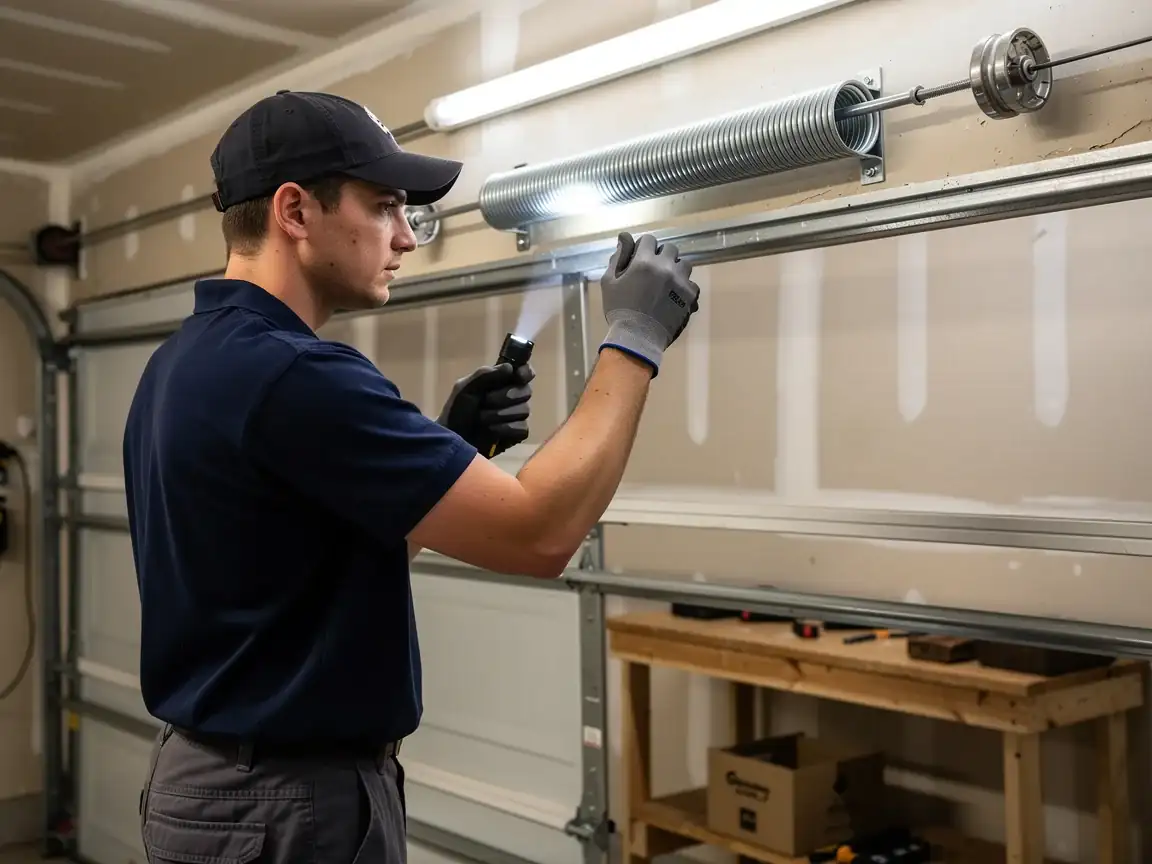
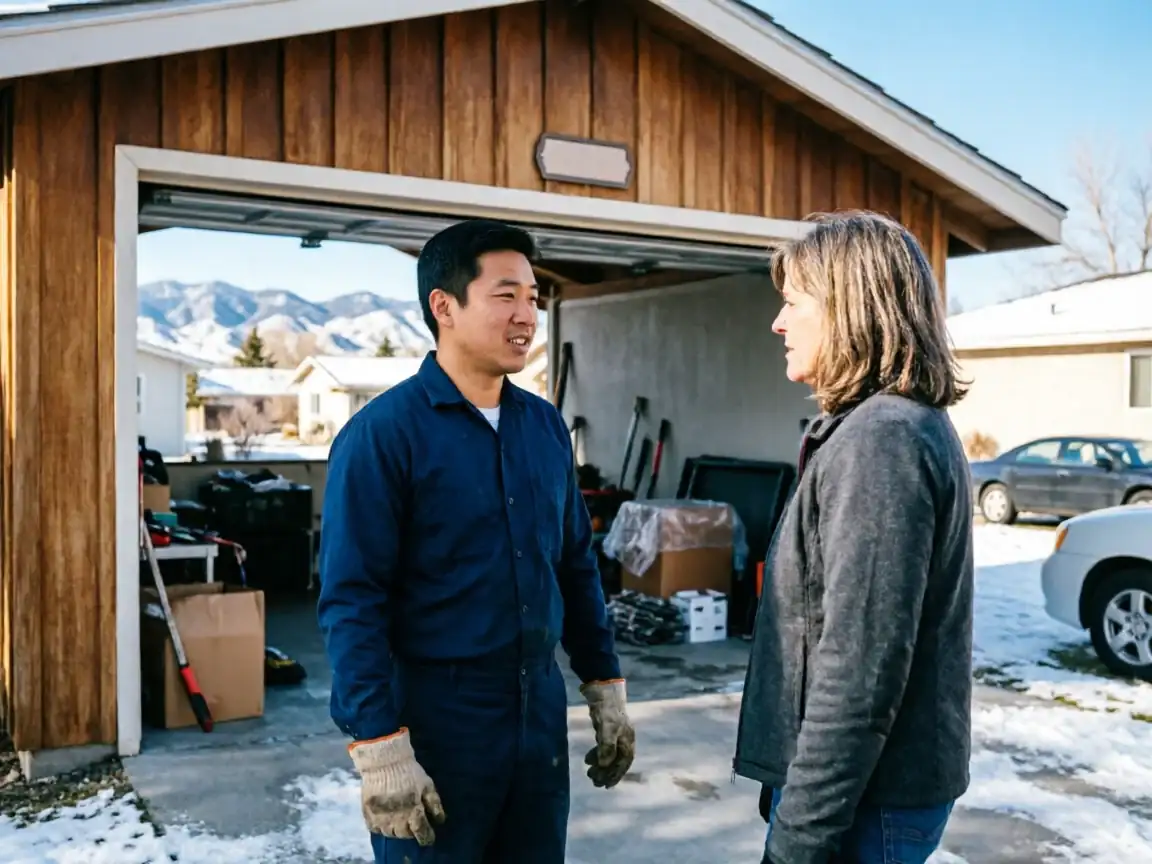
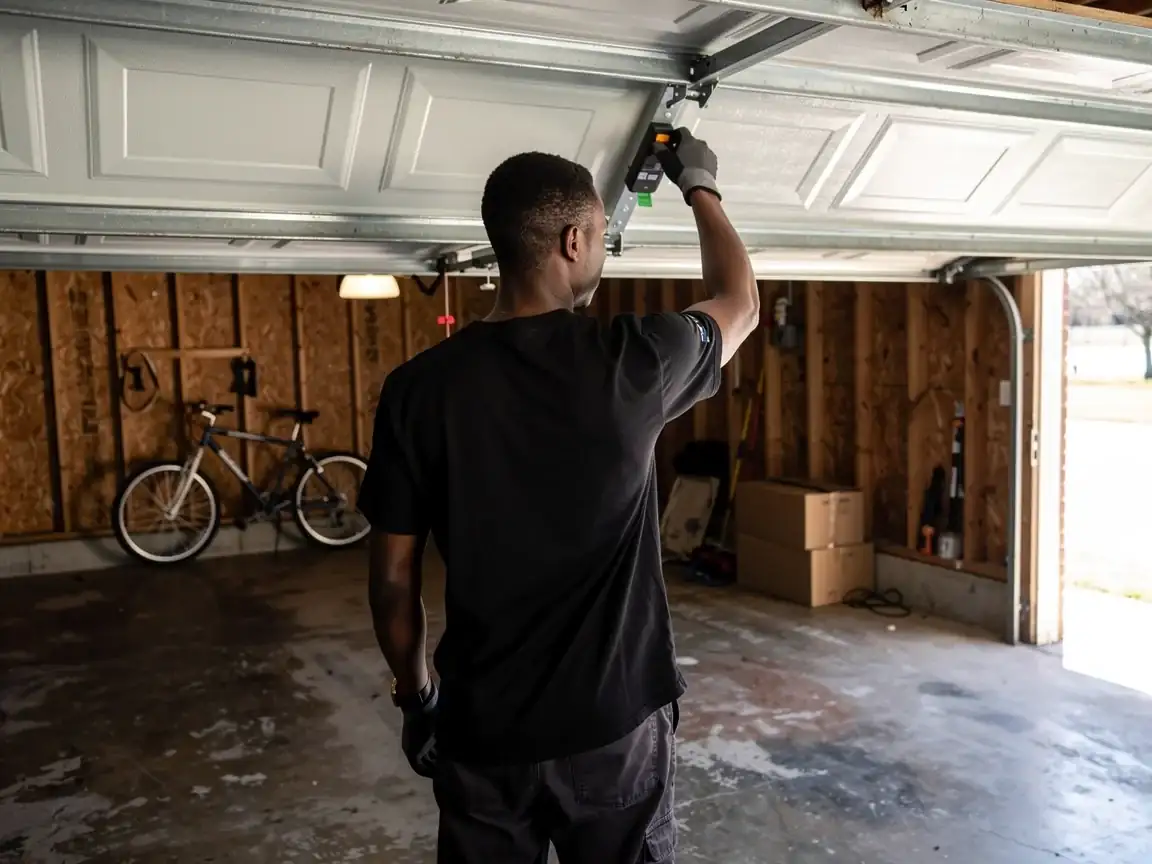
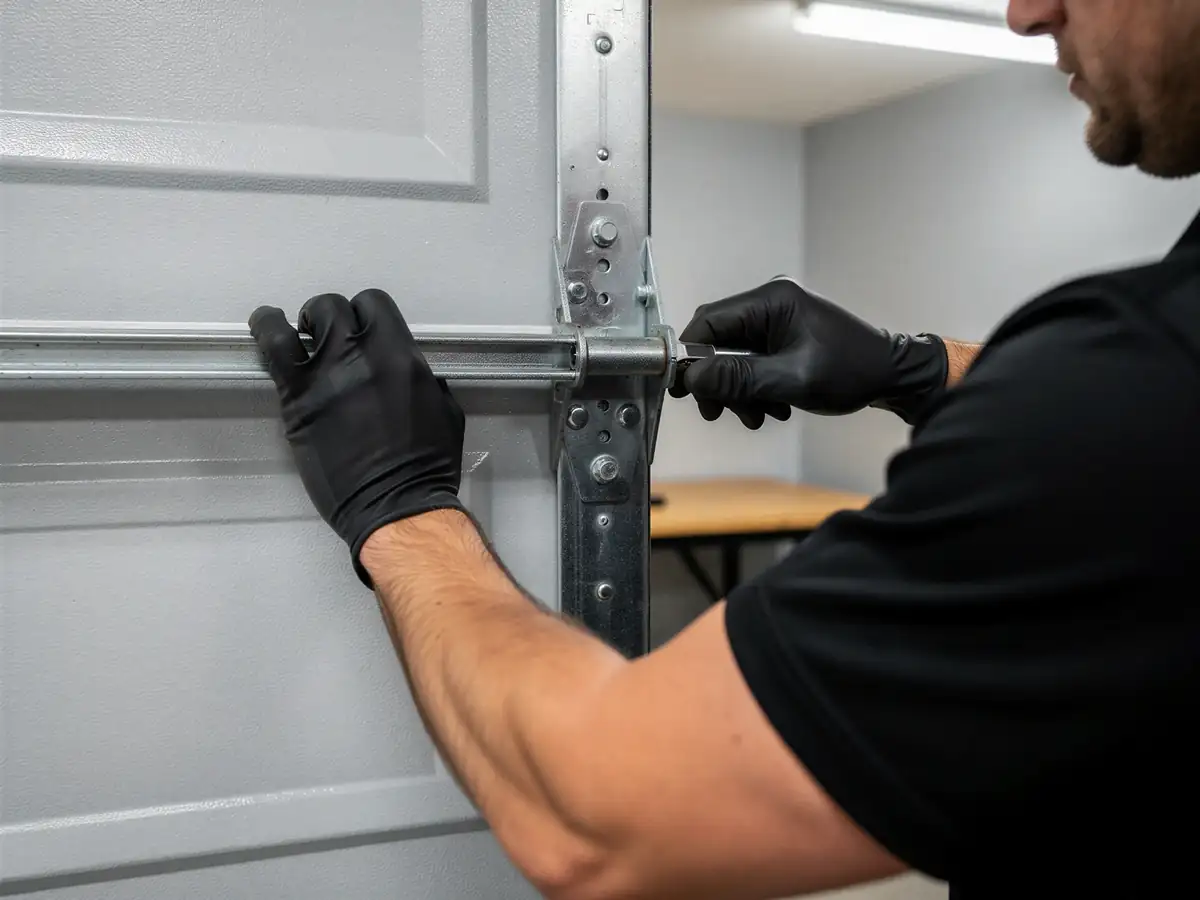
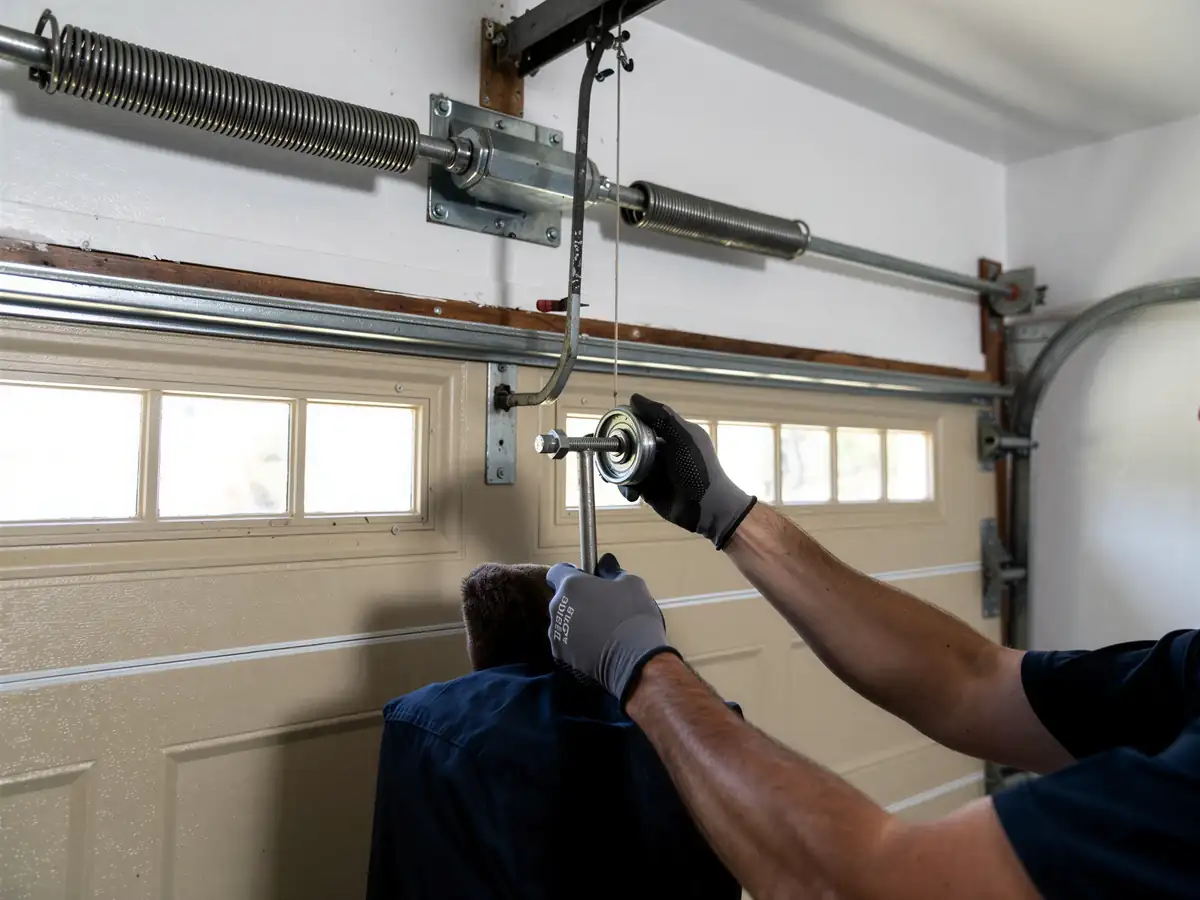
Evergreen sits three miles out from Kalispell, close enough that the drive doesn't pad the job the way a call further down the valley can - we're not burning half the service window getting to you. On arrival, the first thing we check isn't the roller that popped, it's why it popped: track alignment, bracket condition, spring balance. Fixing the symptom without checking the cause just means you call again in a month. We re-square the track, replace what's worn, and run the door through a full open-close cycle before we call it done. With roughly 3,204 households on this side of the valley running doors from the same two decades of construction, we see the same failure pattern often enough to know which checks matter and which are a waste of your time.