Doing It Yourself
Somers sits ten miles out from our shop in Kalispell
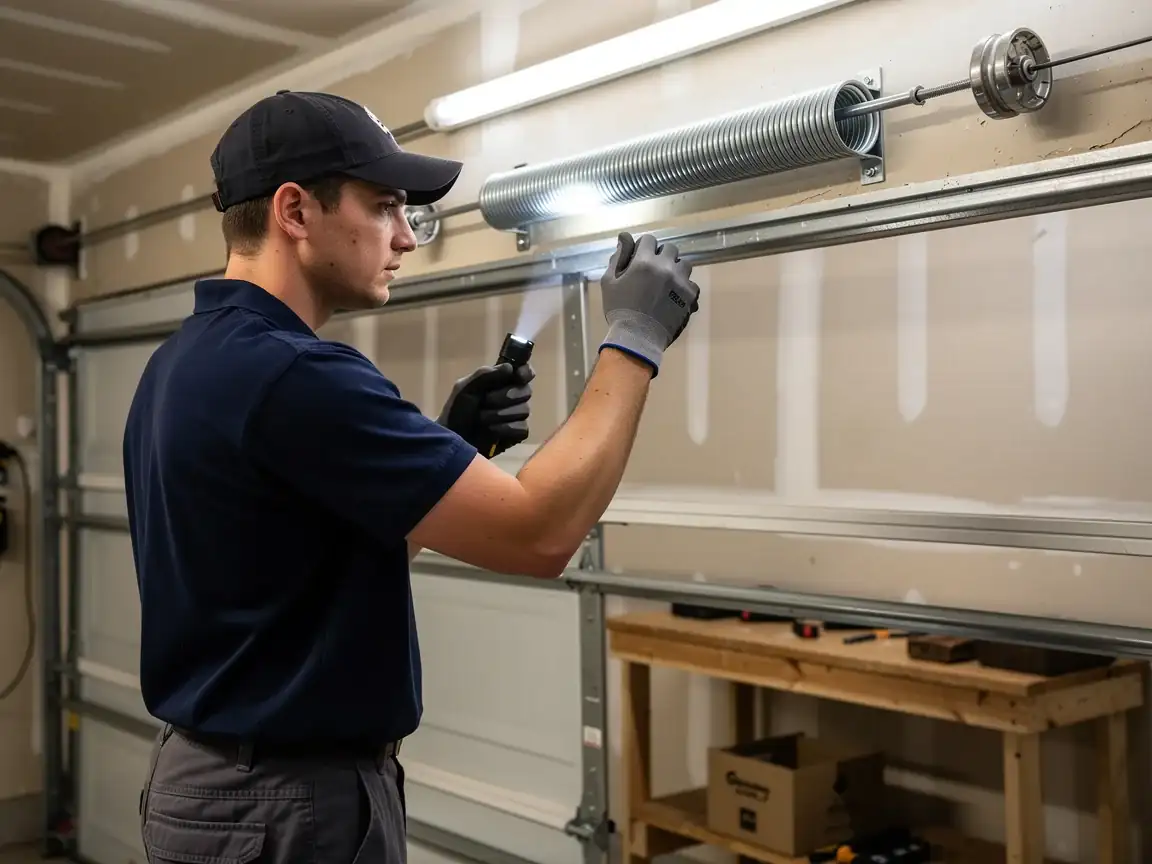
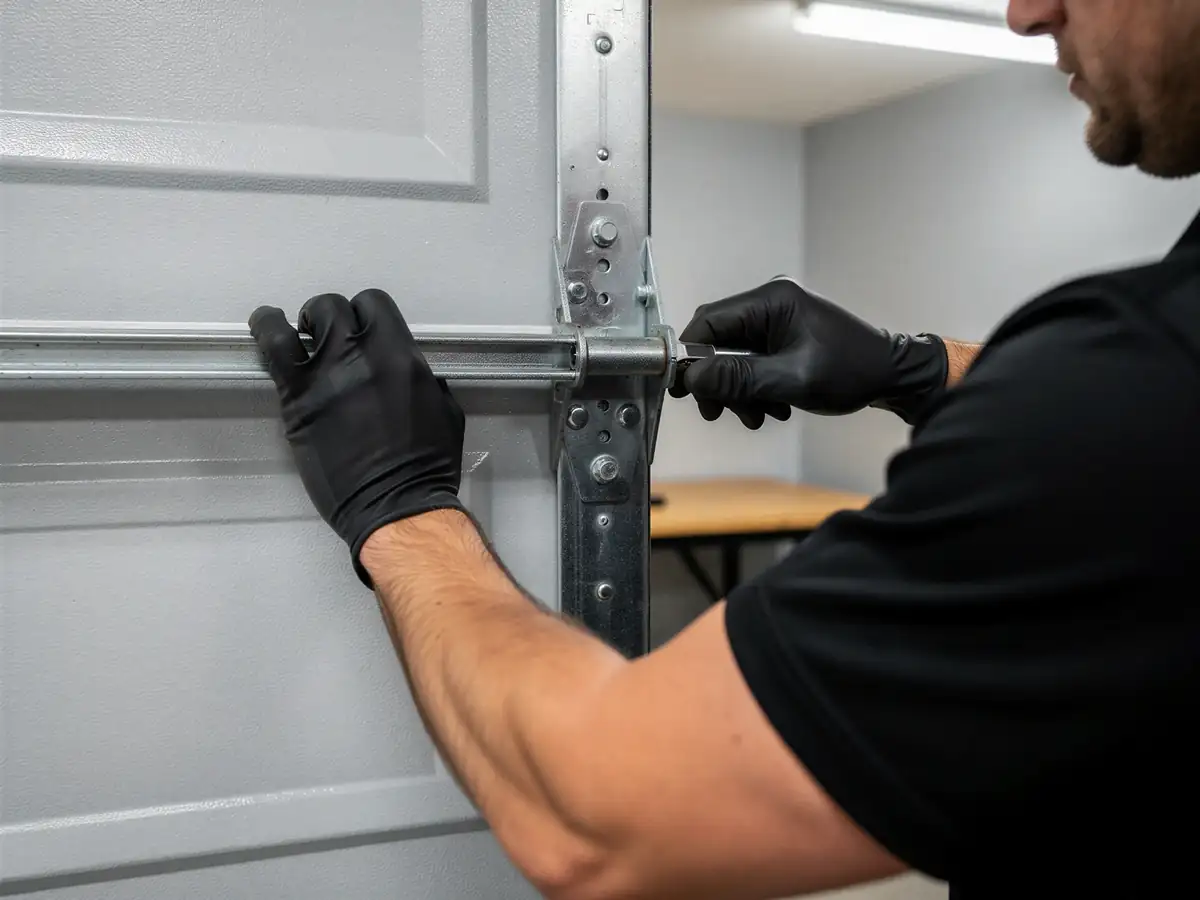
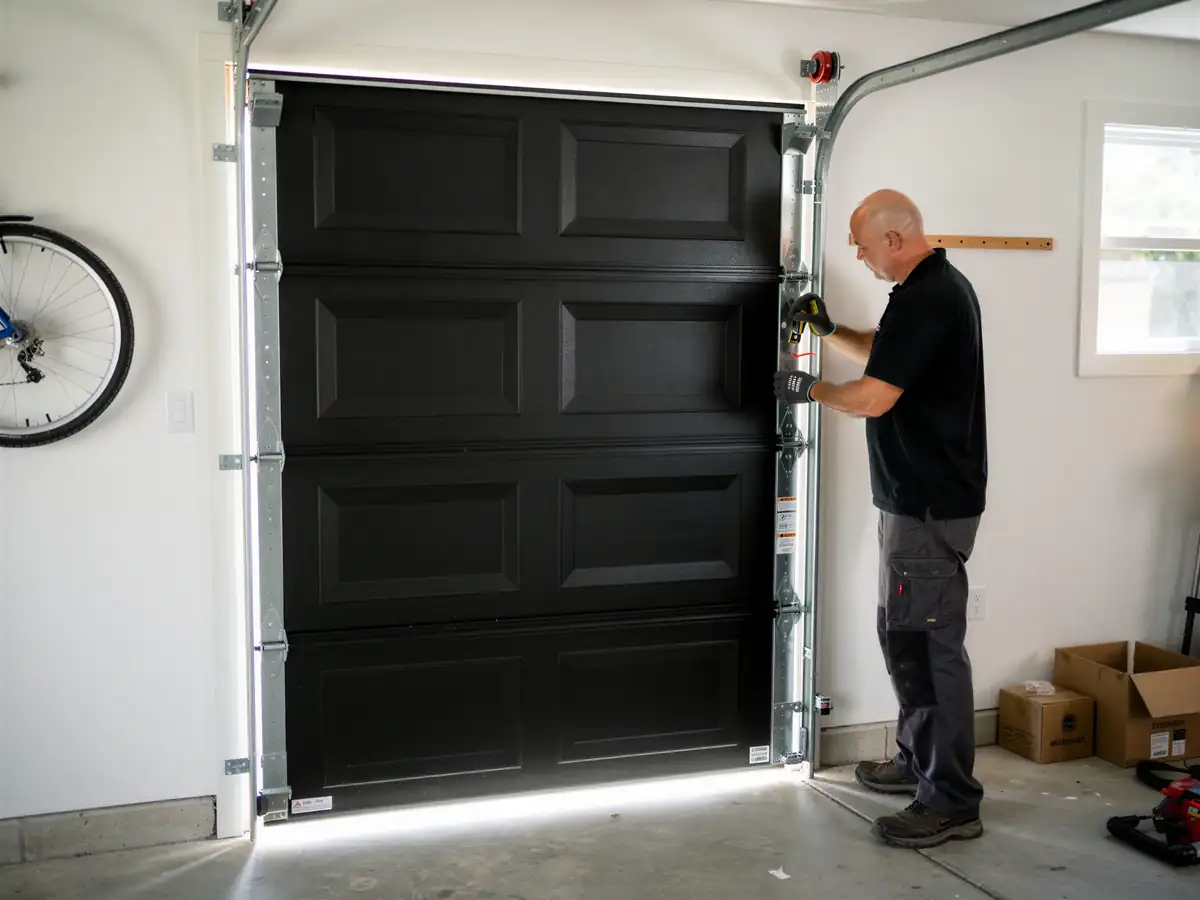
Which changes how a maintenance call here actually works. We're not driving past your place twice a week - when we come out, we're doing the full pass: track alignment, spring tension, roller wear, weatherstrip, opener force settings, all in one visit, because a callback for something we should have caught the first time costs you another ten miles each way.
That said, there's plenty you can do between visits
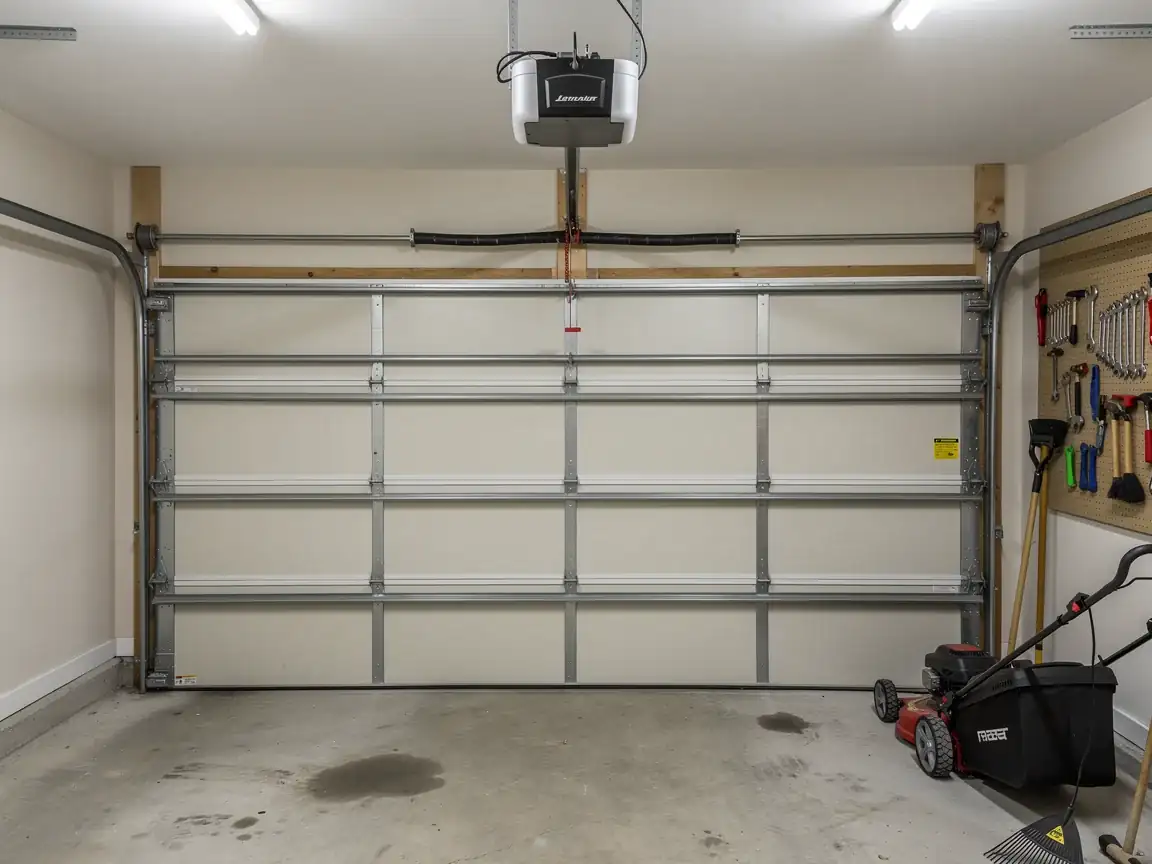
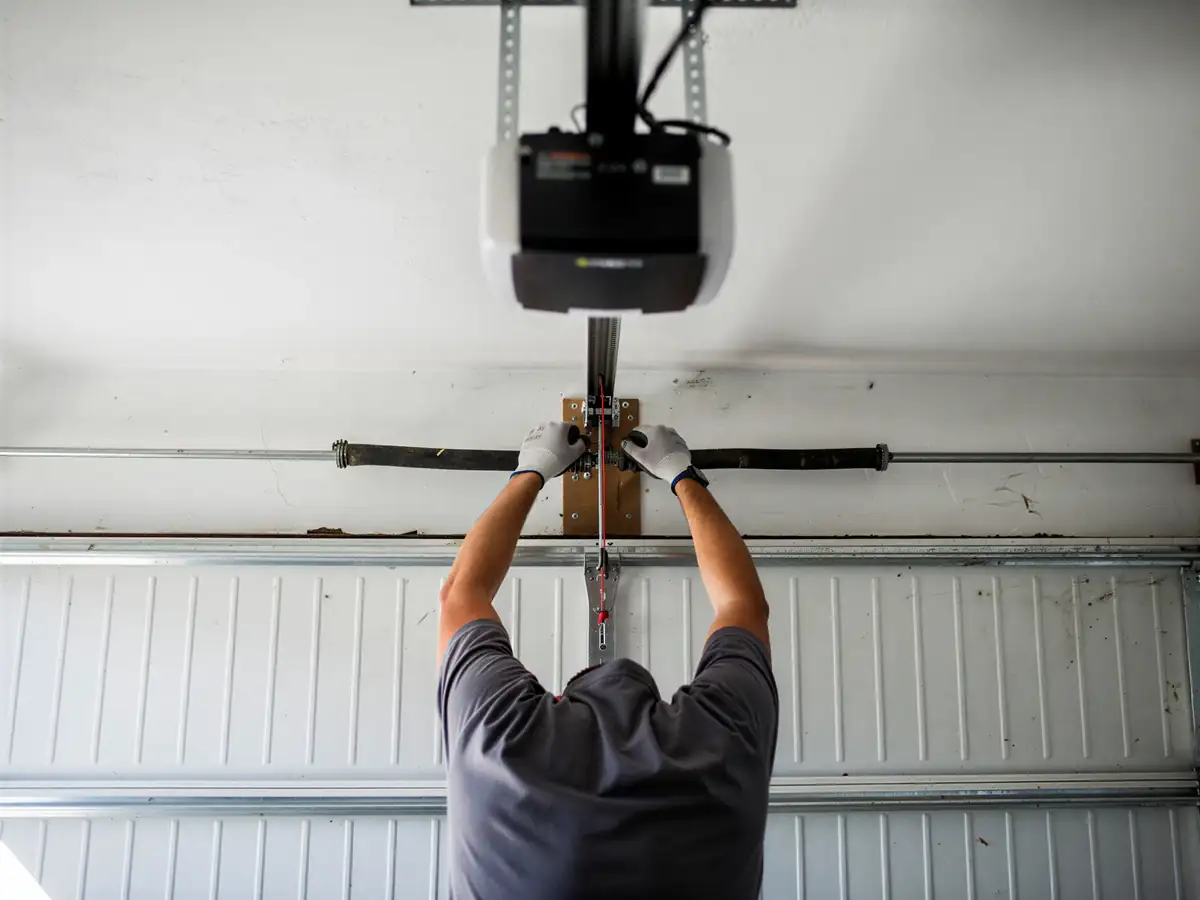
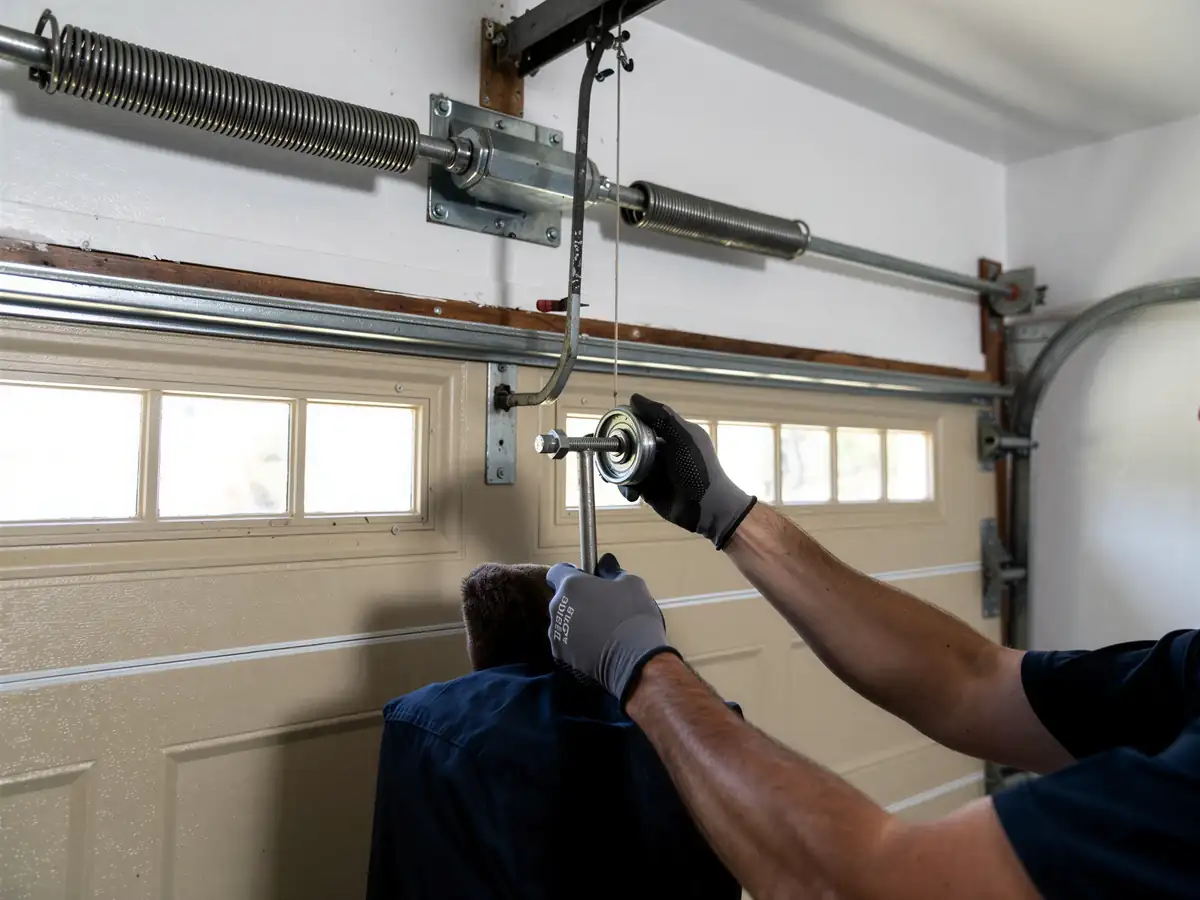
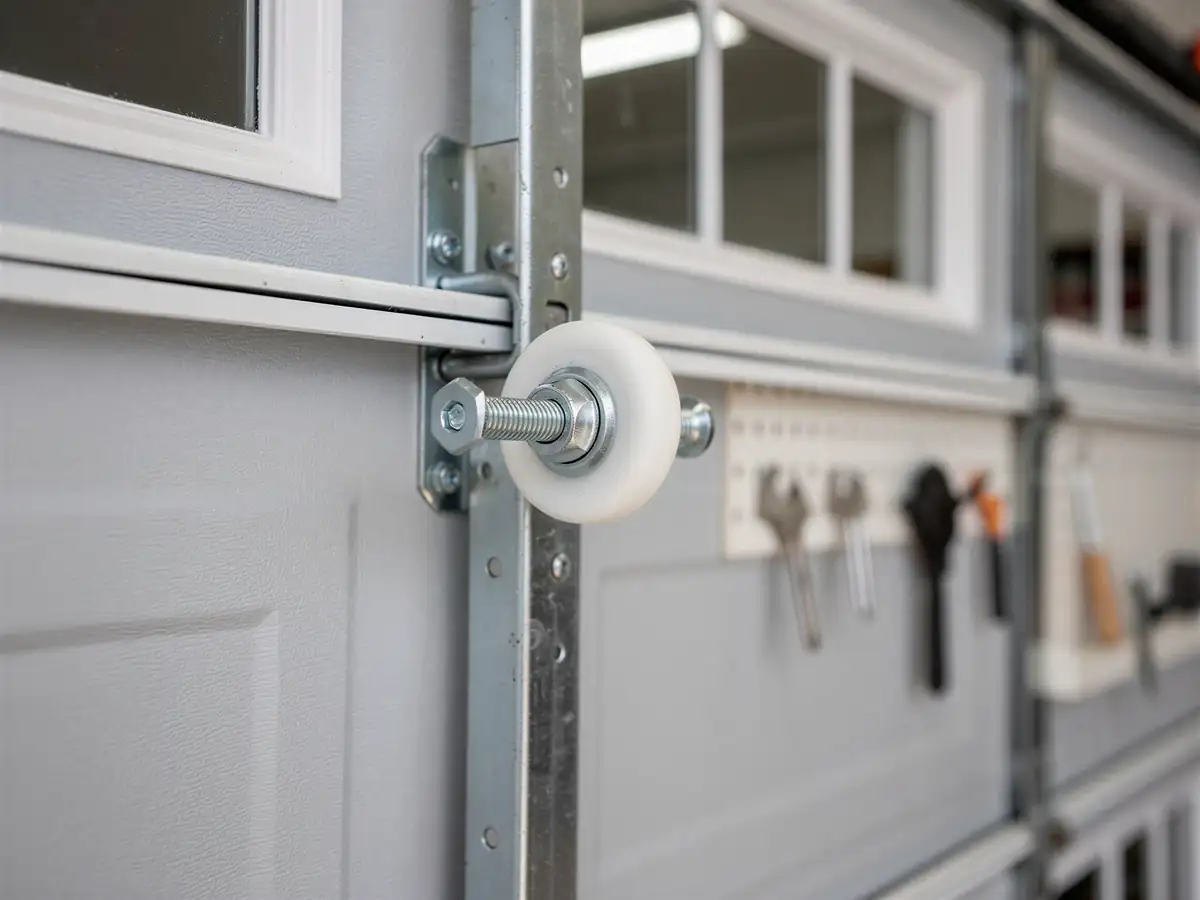
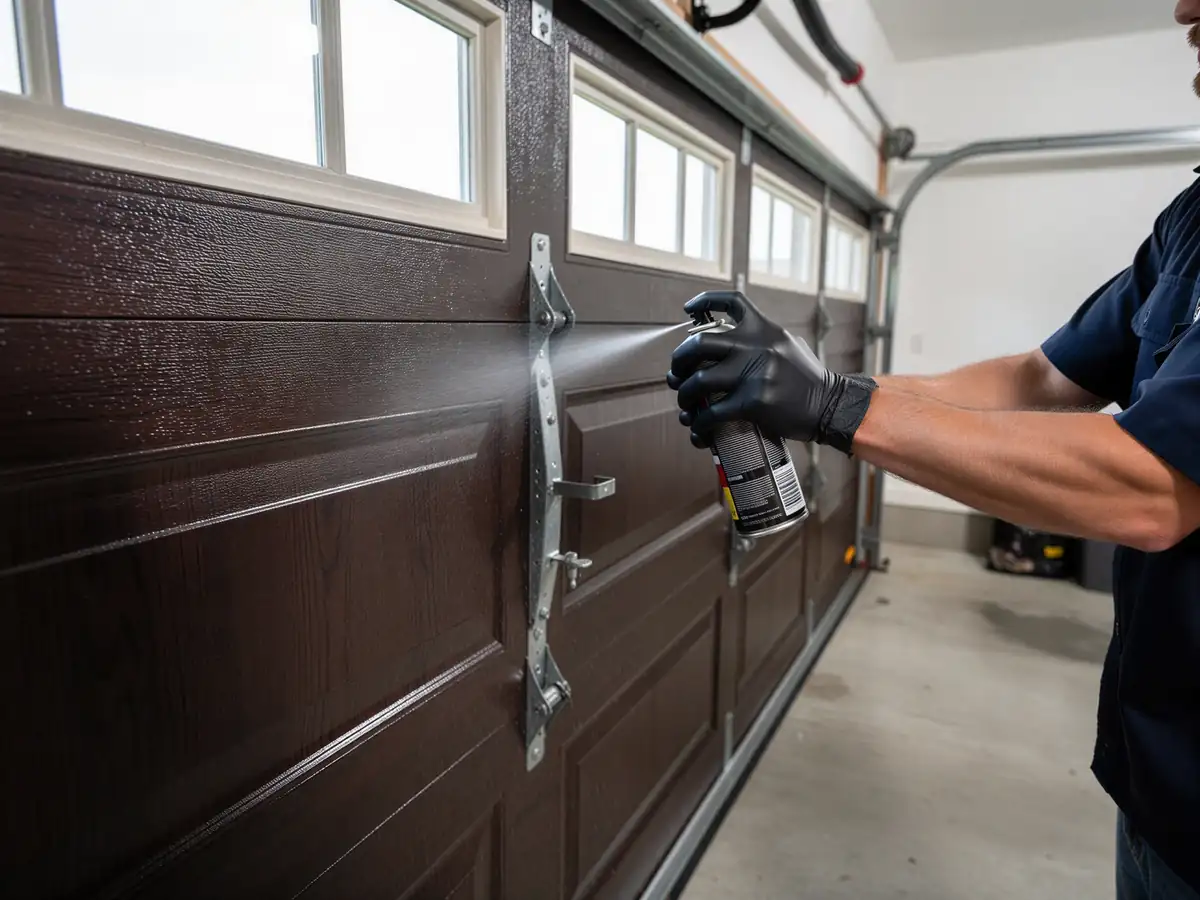
Once a month, pull the release handle and lift the door by hand - it should move smoothly and hold position halfway up. If it drops or feels heavy, the spring is losing tension and that's not a DIY fix. Vacuum the tracks instead of spraying lubricant into them (dust sticks to oil and grinds rollers faster). A dry PTFE lubricant on the hinges and rollers, not WD-40, keeps things moving through winter. What you shouldn't touch: torsion spring adjustment, cable tension, or anything on the opener's logic board. Those jobs are where the ten-mile trip pays for itself.
The Symptom
Most of the maintenance calls we get out of Somers start the same way: a door that used to open quiet now grinds or shudders partway up, or an opener that strains and reverses before it reaches the top. With roughly 569 households in the area and a housing stock that centers on 1980 construction, a lot of these doors and their original hardware are over forty years old - older than almost anything else a homeowner here still runs daily.
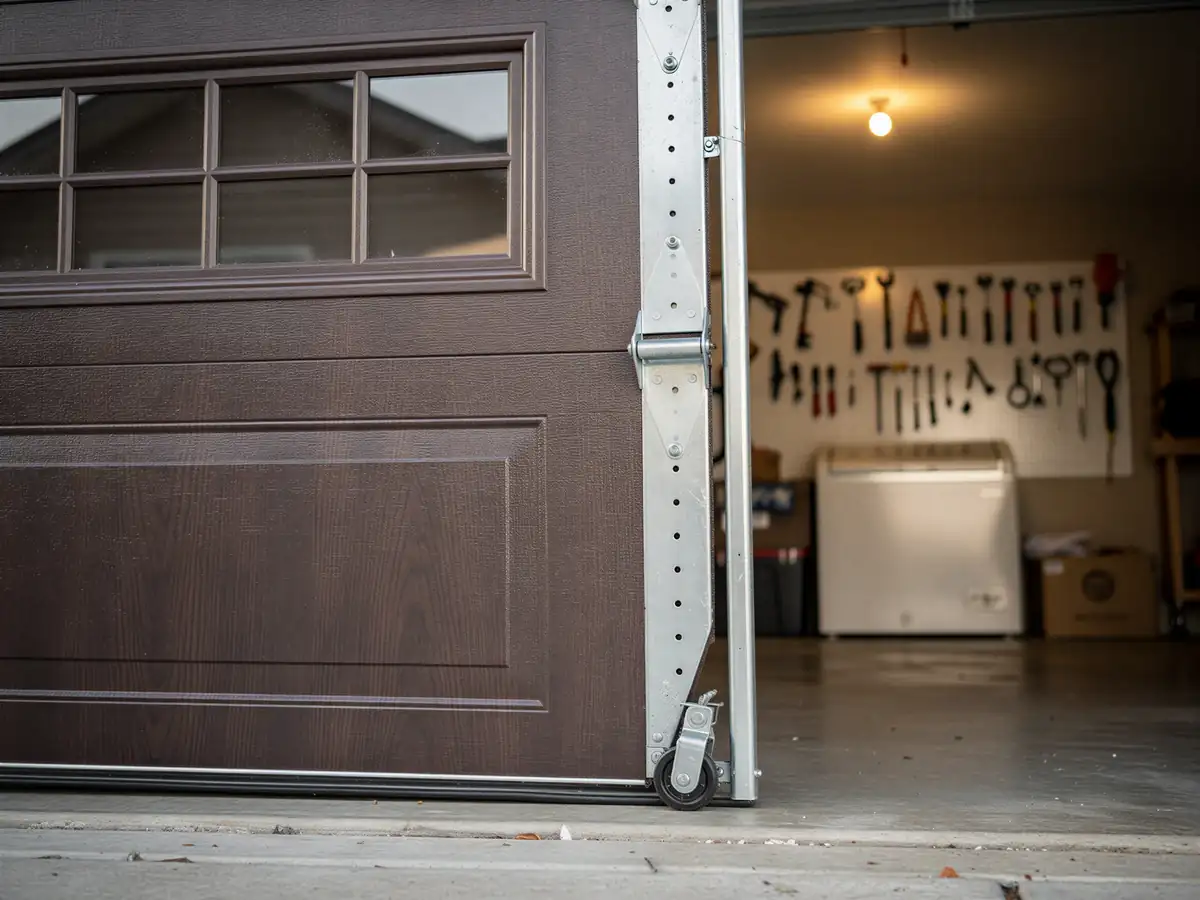
That age shows up as slack in the extension or torsion springs, rollers worn oval instead of round, and track brackets that have backed out of the framing over four decades of seasonal swelling. None of that announces itself with a warning light. It shows up as noise, then as hesitation, then as a door that won't fully close - usually in that order, over a couple of winters.
Where This Job Goes Sideways
The trouble with maintaining a 1980-era door in a severe cold climate is that the parts that fail first - torsion springs rated for a specific cycle count and door weight - were sized for hardware that's since been replaced piecemeal over the years, often with mismatched springs or a heavier insulated panel swapped in without reconsidering the spring rating. We see this more in older stock than in newer builds, because newer doors came as a matched system from day one.
We're honest about where maintenance stops and replacement starts: if a spring has already been re-wound once or the drum shows wear grooves, another adjustment buys you a few months, not a few years. At that point we'll tell you straight that a tune-up is the wrong call and a spring swap is the right one, even though it's a bigger invoice for us to write up on-site.
Why This Fails Locally
Cold-climate conditions make a bigger difference here than most homeowners expect
Steel contracts in deep cold, torsion springs lose a measurable amount of tension, and door seals - especially the original rubber on a door built around 1980 - harden and crack rather than flexing. On a mild day the door might operate fine; after a hard overnight freeze, the same door binds in the track or the opener's force setting trips early because the door is physically harder to lift.
At a median household income of $56,501 for the area
We also hear from a lot of owners who'd rather catch this early with a maintenance visit than pay for an emergency spring replacement in January. That's the right instinct - a once-a-year check before the deep cold sets in catches the seal and spring issues while they're still cheap to fix.
- $56,501 median household income