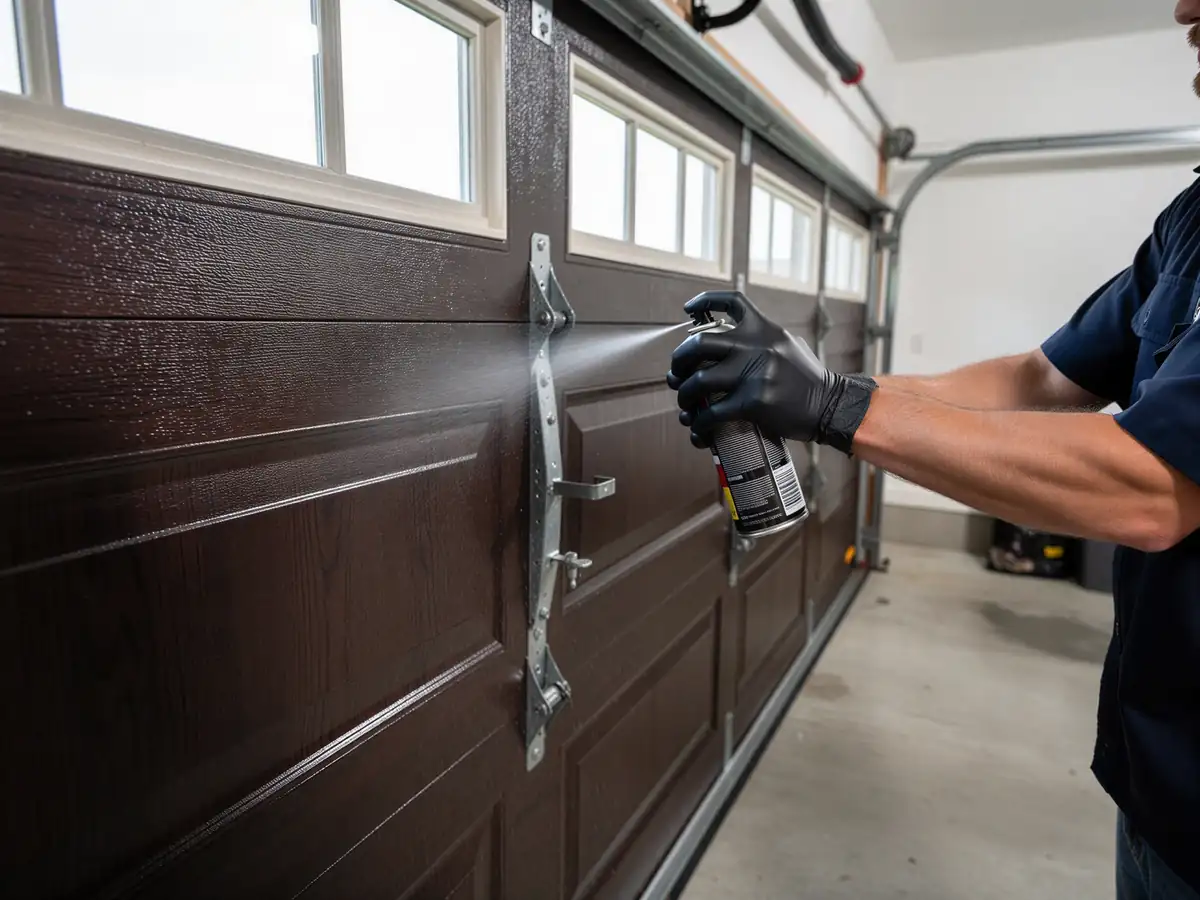
Where This Job Goes Sideways
The common mistake with off-track doors out this way is treating it like a one-person fix because the house is newer and the parts look clean. Newer track and rollers still bend under the same stresses - a car bumper, a slipped cable, wind catching a door mid-cycle in a cold snap. This area sits in a severe cold climate band, and a door that's iced at the bottom seal can bind just enough that the rollers jump the rail when the opener forces it. People reset the track, run the opener, and it looks fine for a week. Then a roller that's been running slightly out of alignment chews through the rail edge, and what was a twenty-minute fix becomes a track replacement. With 462 households out here, most of them a fair drive from any service call, the smart move is getting it looked at once and getting it right, rather than three separate trips for the same door.
How We Fix It
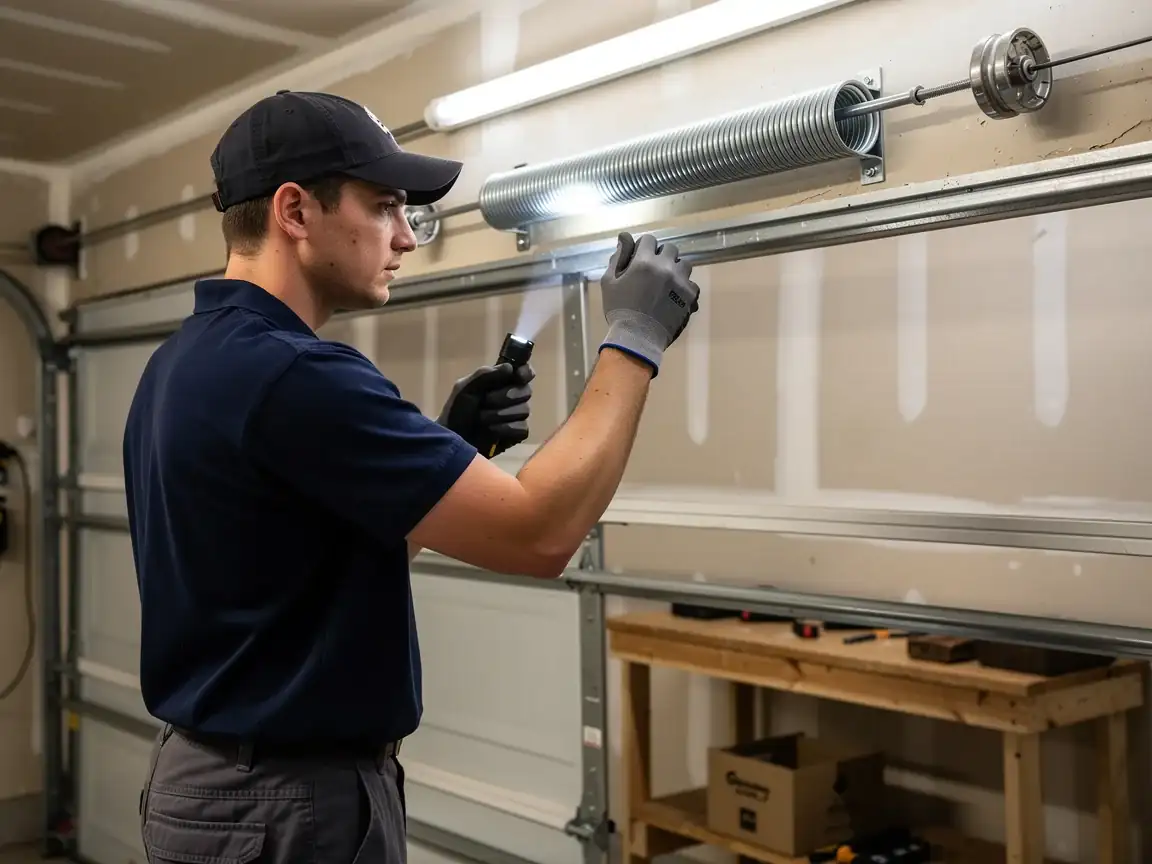
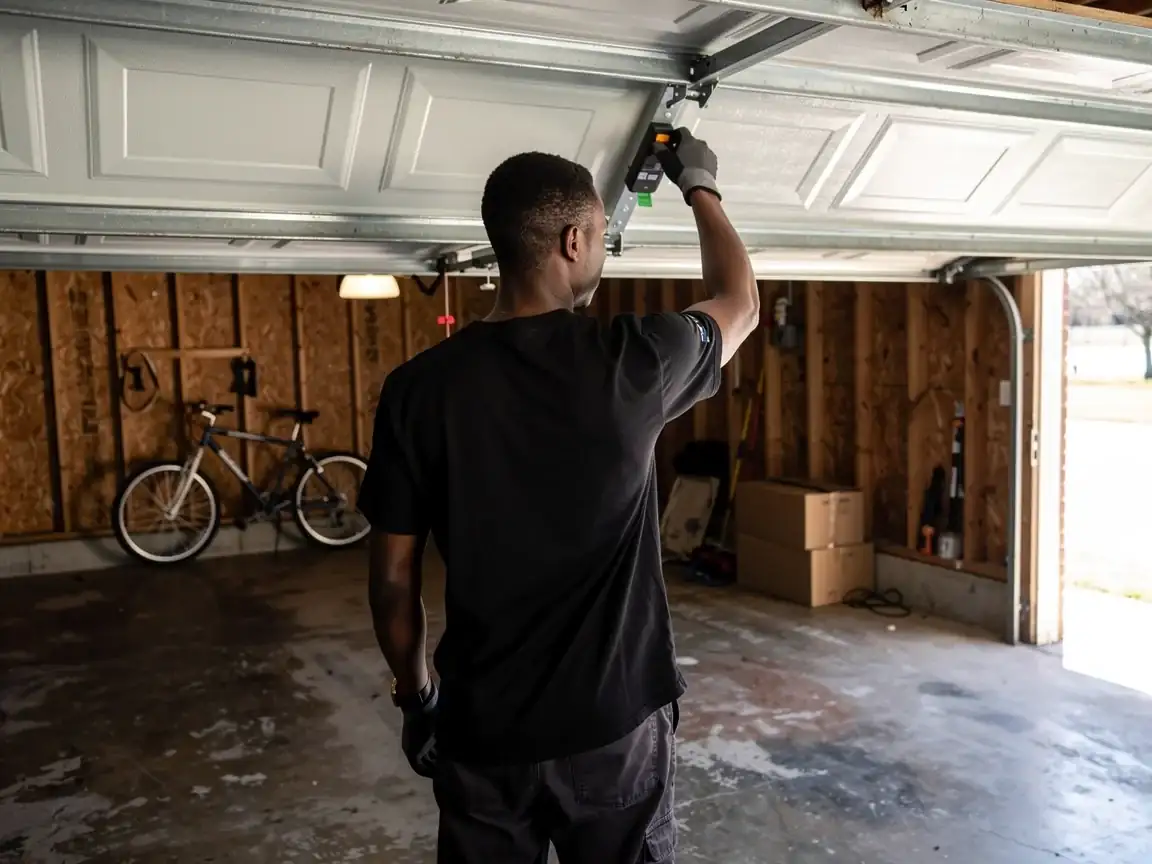
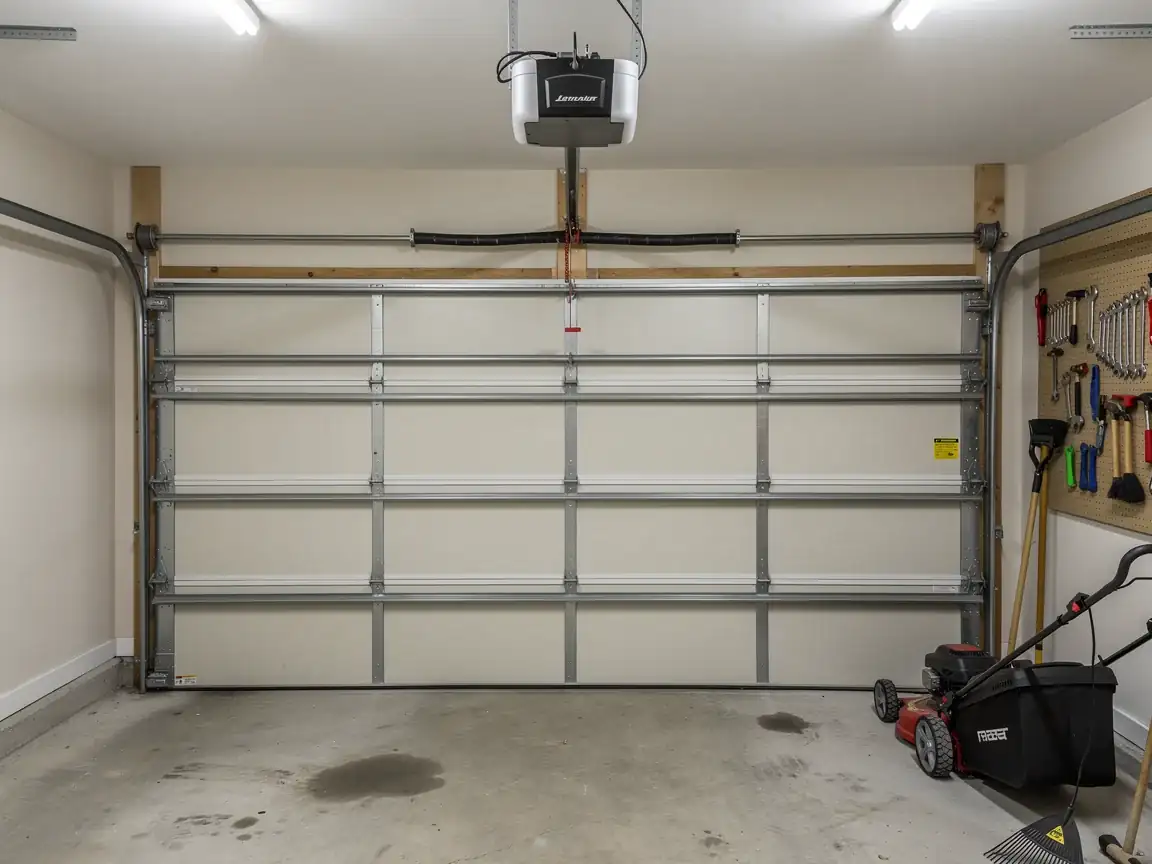
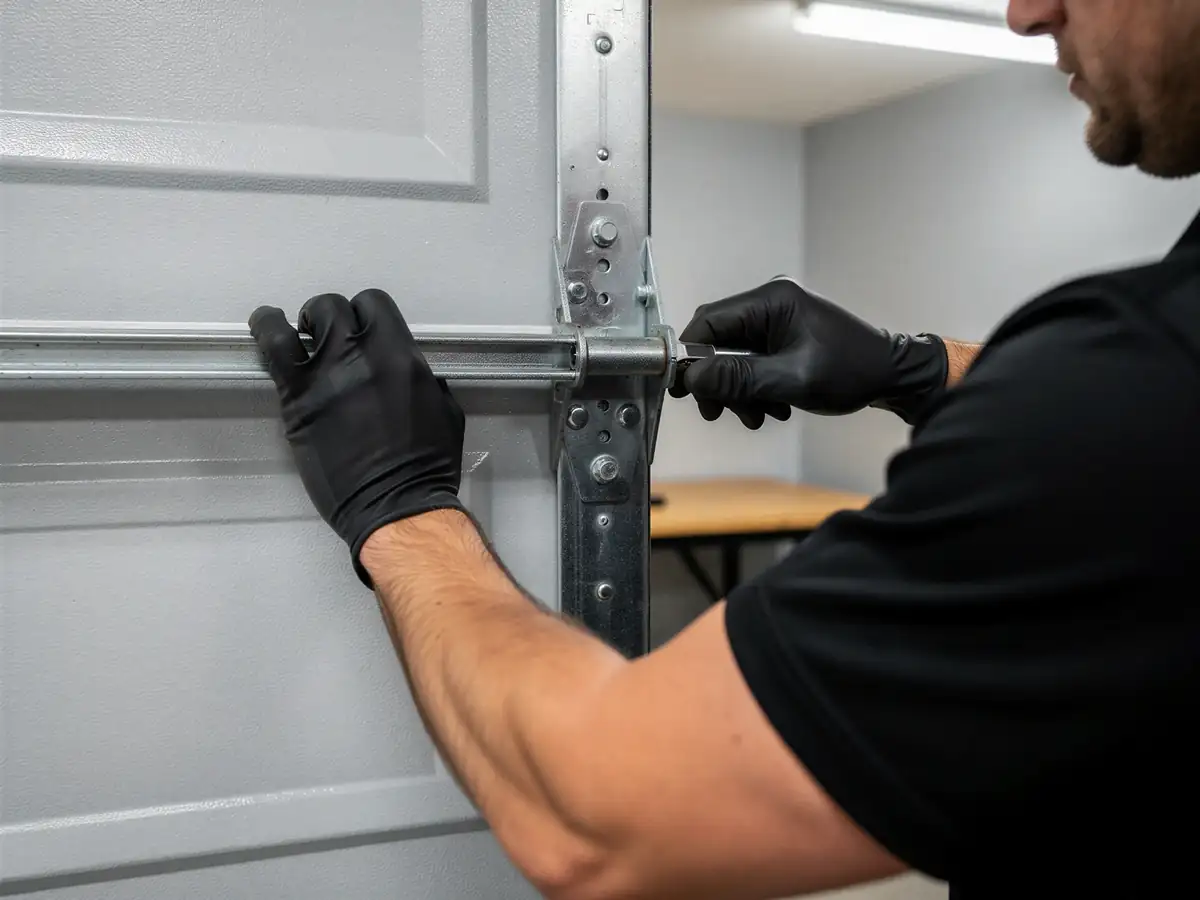
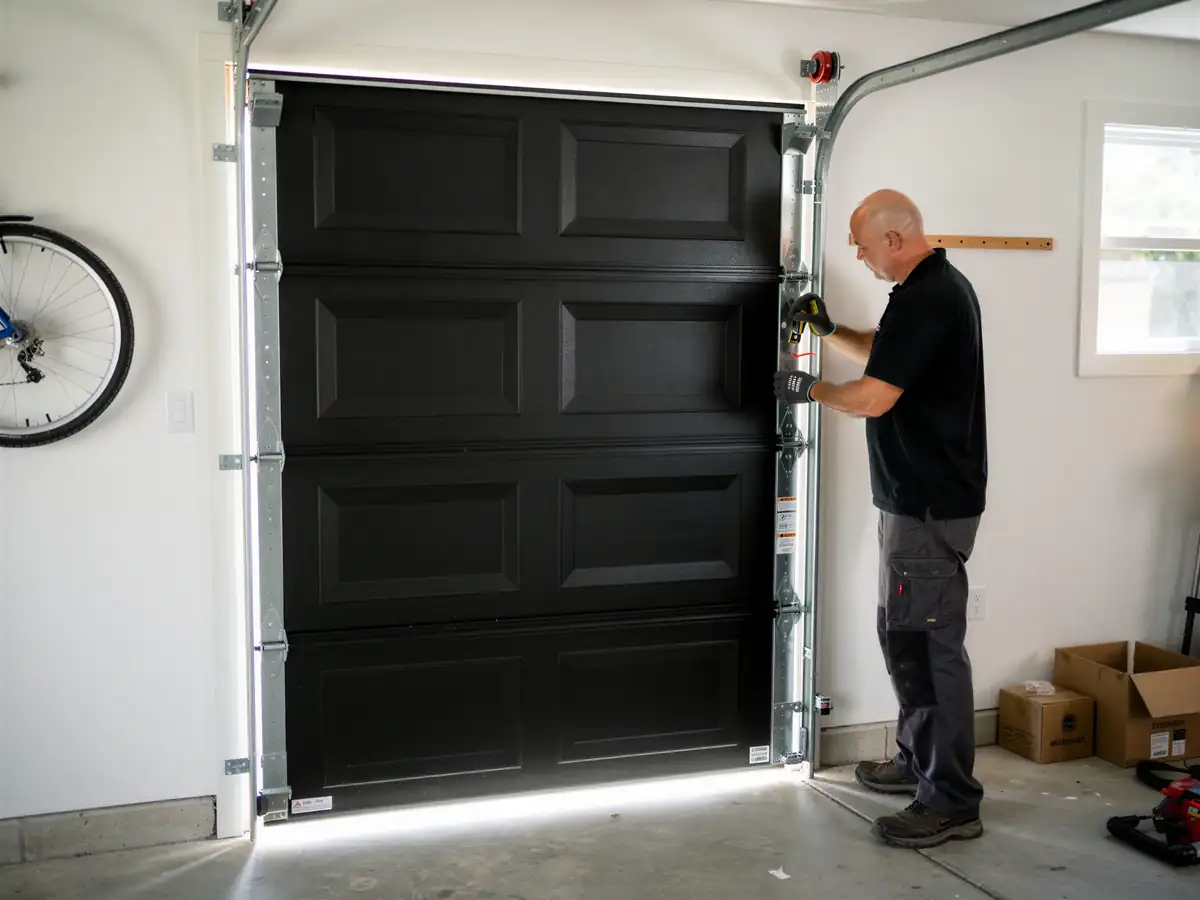
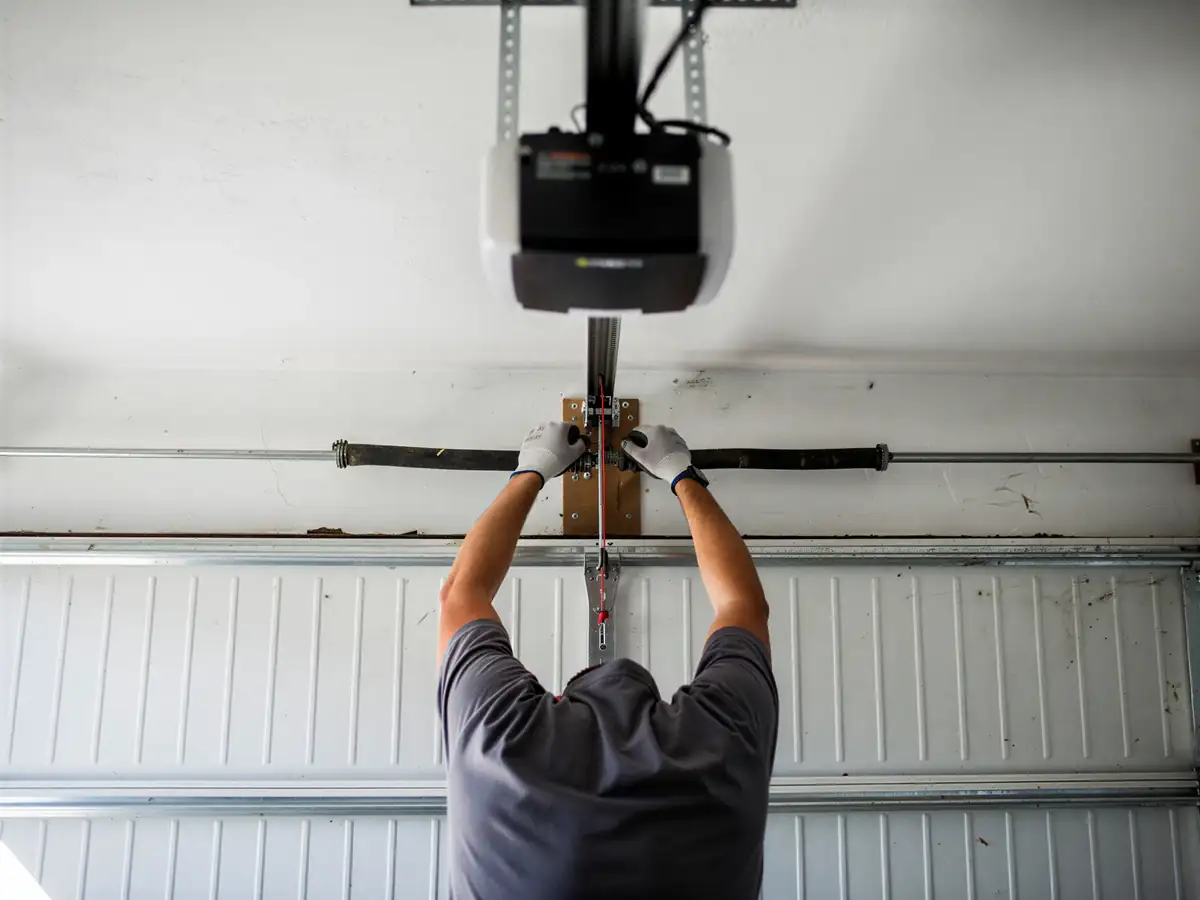
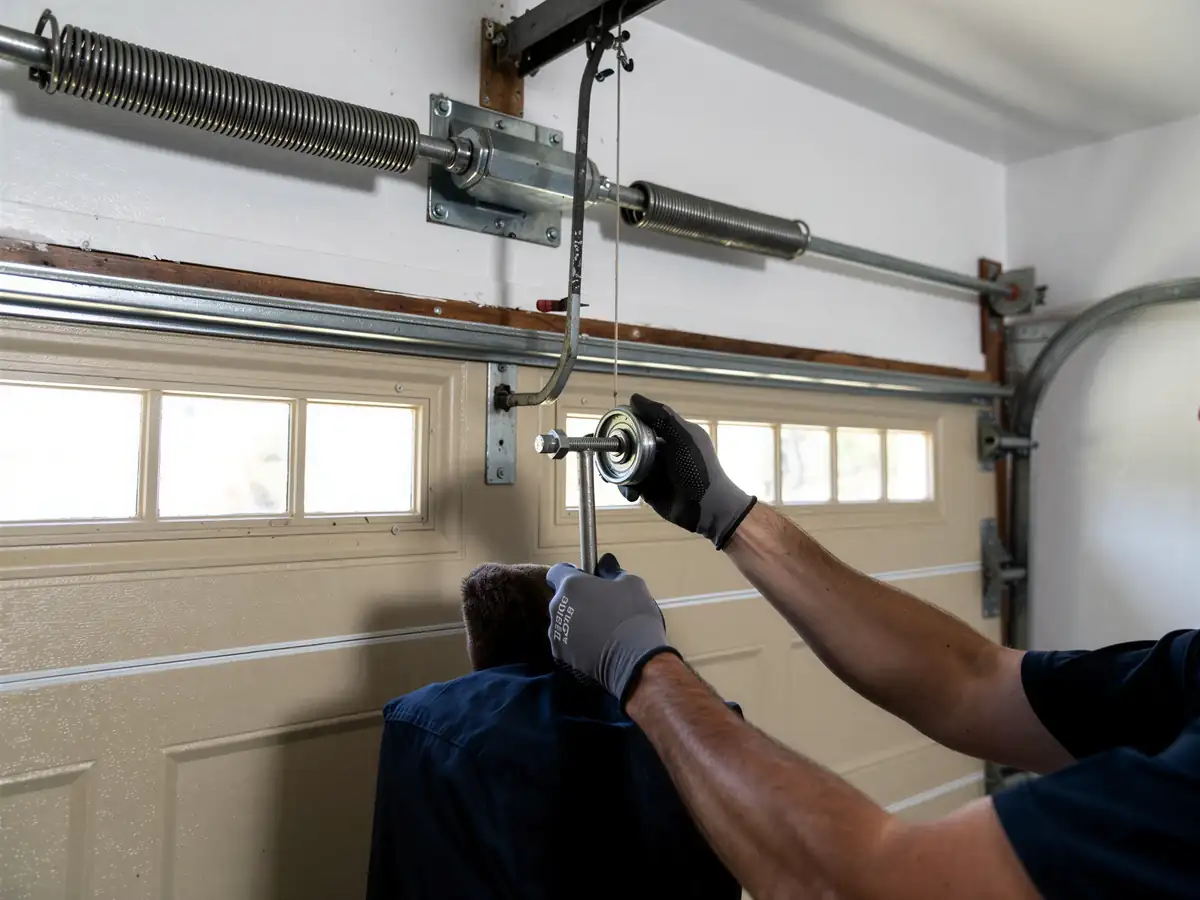
We realign the track, check the rollers and cables for wear, and make sure the door is square in the opening before anything gets re-tensioned. On a door built around the 2003 era common to this area, we're usually dealing with a torsion spring system and steel rollers rather than the older extension-spring setups you'd find on a door from the eighties. That's a more predictable repair - less guessing about mismatched parts, since the hardware tends to be original and consistent. If the track itself is bent rather than just knocked loose, we replace that section rather than hammering it straight; a reshaped track never runs as true, and it'll jump again. We don't carry every spring size on the truck for every job, so if yours is unusual we may need a short return trip - we'll tell you upfront if that's the case rather than guessing at the door.
The Symptom
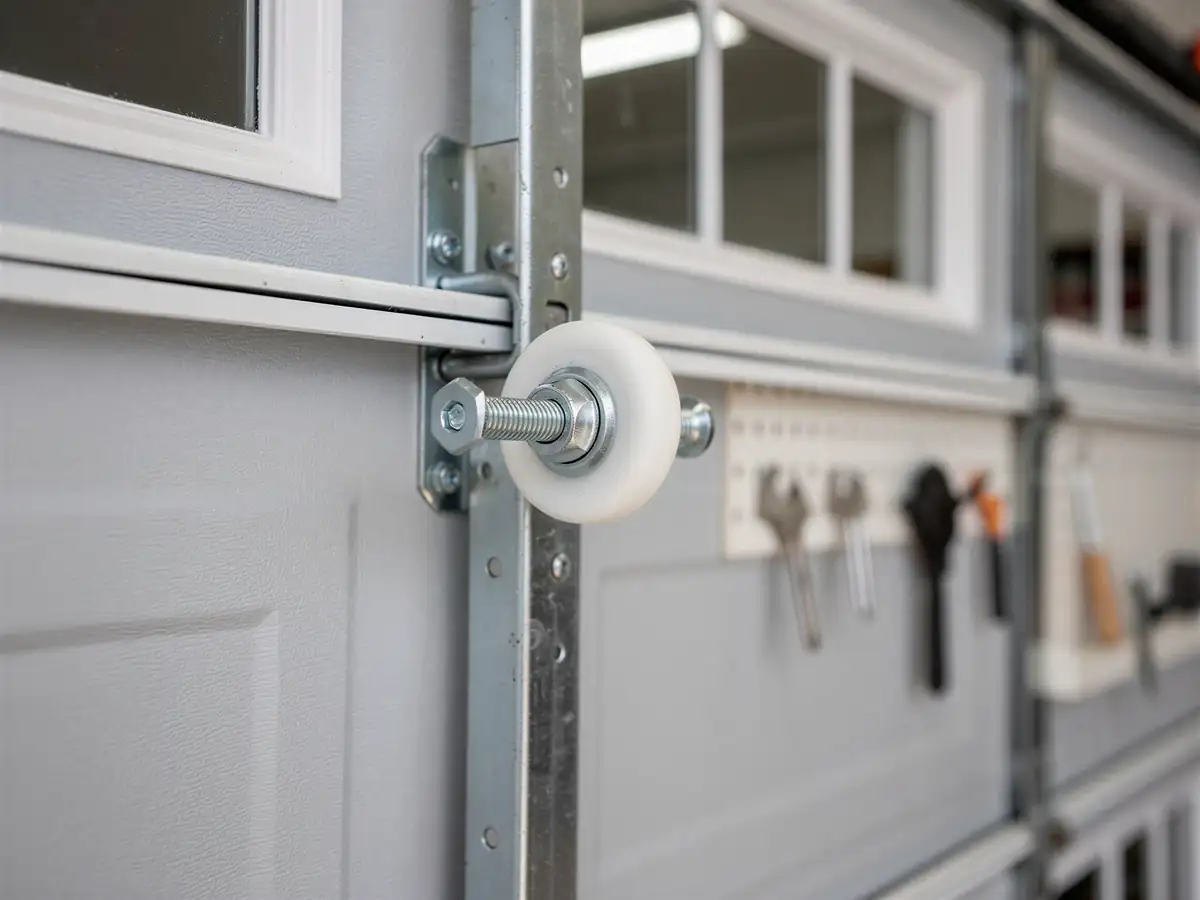
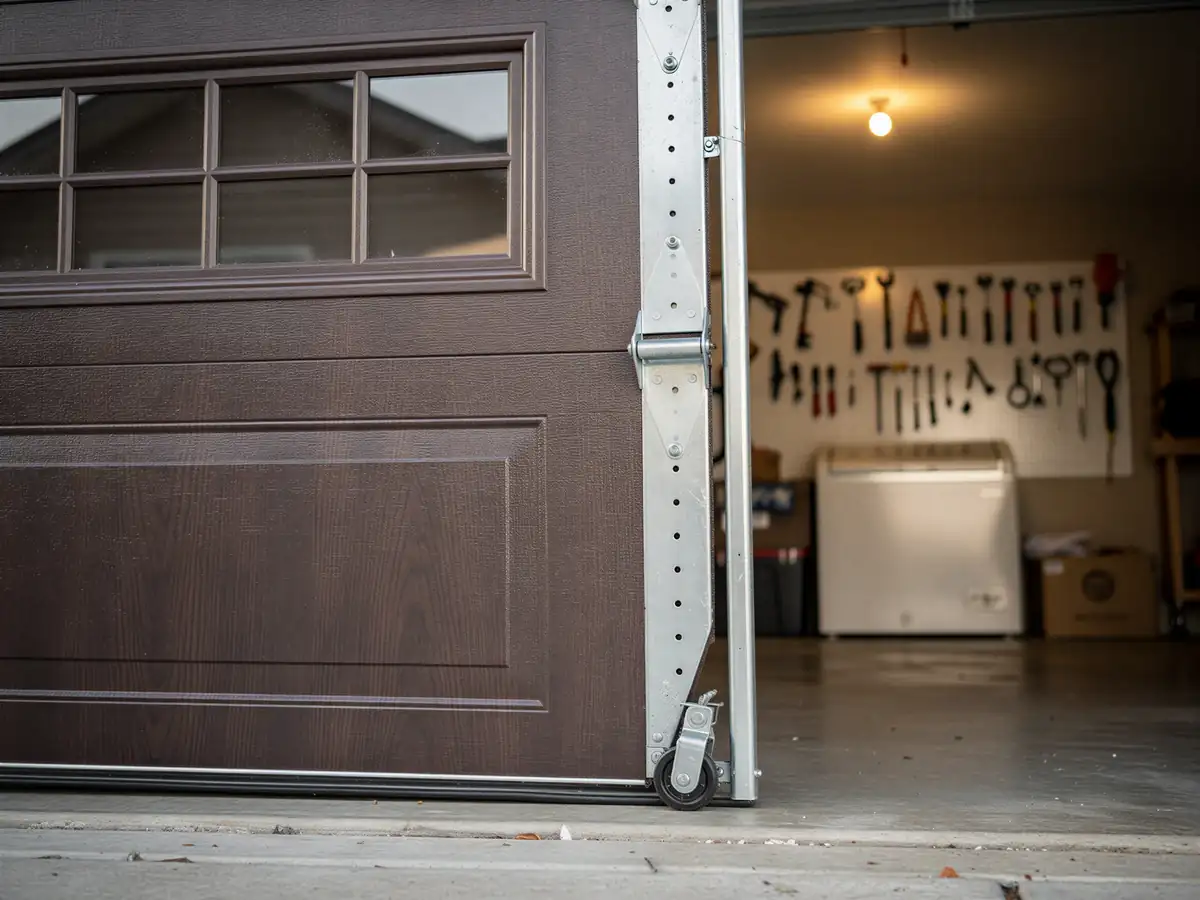
An off-track door usually shows itself the same way: one side rides lower than the other, there's a gap at the bottom seal, or the door binds and groans partway through its cycle instead of moving smooth. Sometimes you'll hear a roller clicking against the rail before it fully jumps. On newer hardware like what's common in this area, it's rarely rust eating through a track - it's more often a cable that slipped off the drum or a roller bracket that took a hit. Either way, once a door is visibly crooked in the opening, every cycle after that stresses the opener and the remaining good hardware. That's the point to stop running it and get it looked at, not after it's already come fully off the rail.