The Symptom
Most garage doors in Columbia Falls went up around 1979
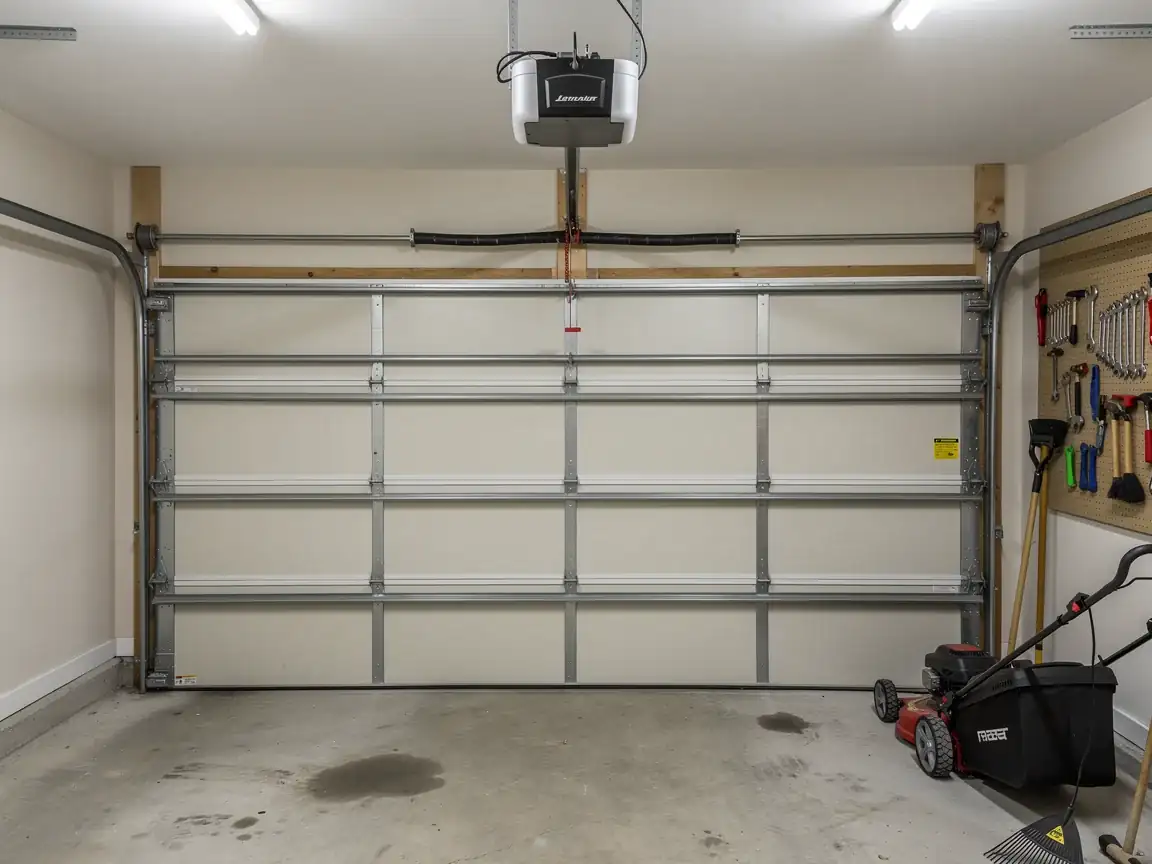
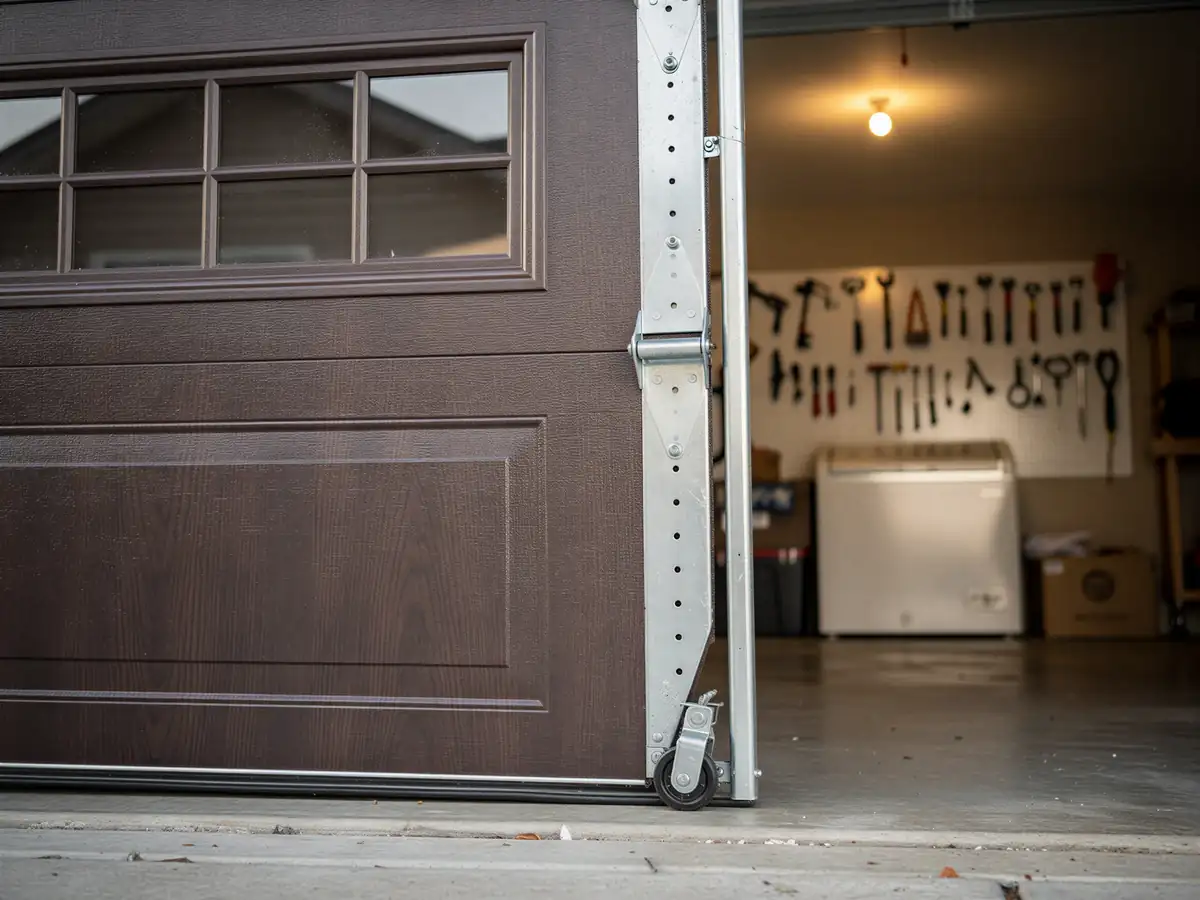
During the stretch of building that put up a lot of this area's housing stock. That means a specific kind of door: single-layer steel, usually a 16x7 for two-car garages, hung on roll-formed track that was light-gauge even when new. Forty-plus years on, that track has worked loose at the brackets, bent slightly from a bumped car or a heavy snow load against the panel, or just worn at the rollers until the door rides up out of the channel on one side.
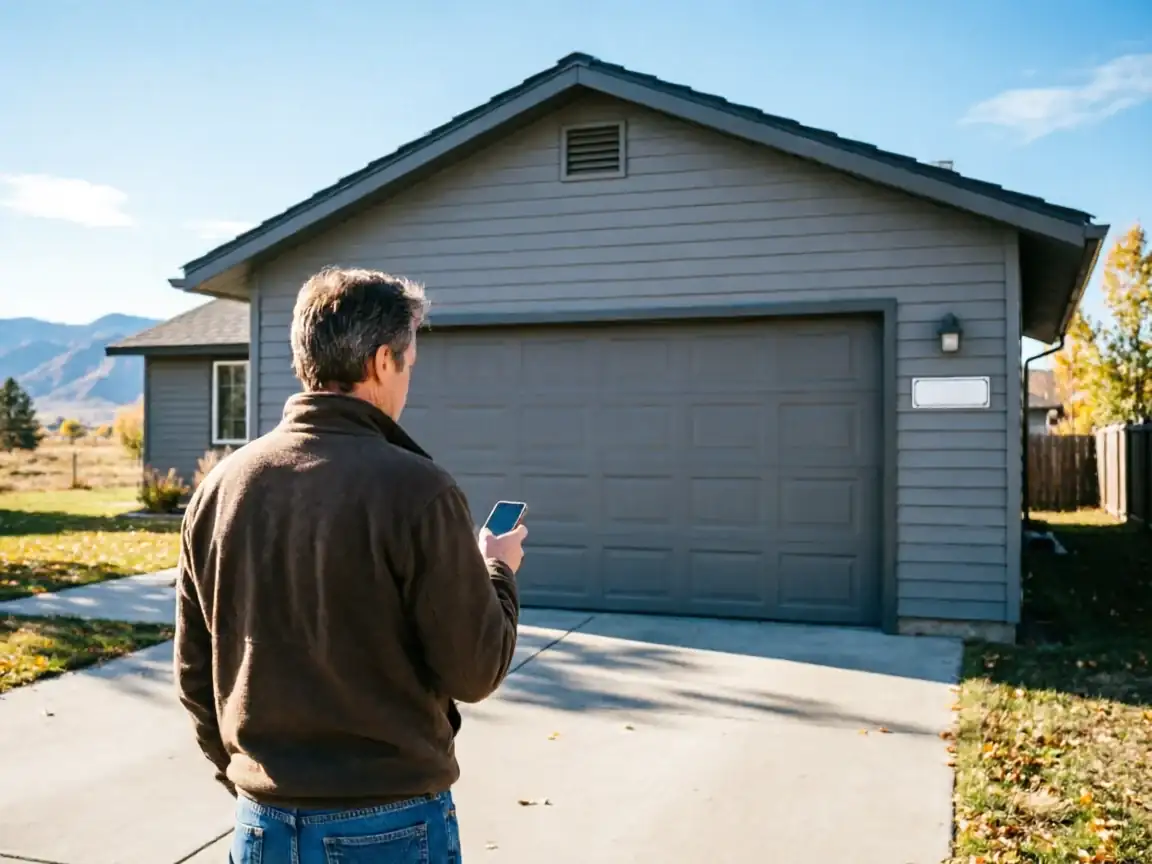
When it comes off track, the door usually looks crooked in the opening
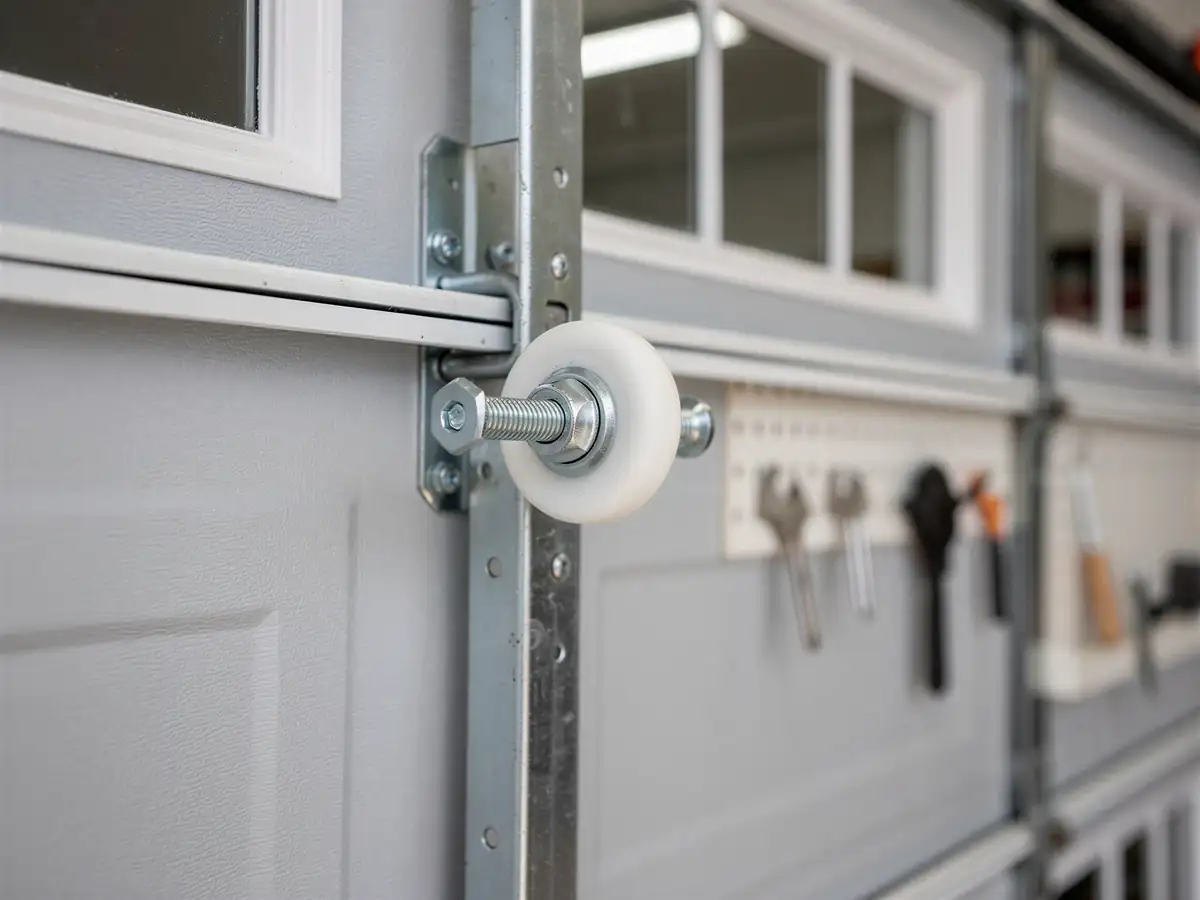
Or one bottom corner sits lower than the other. Sometimes it jams halfway and won't move either direction - the opener strains, clicks, and gives up. On a door this age, the rollers are often the original steel ones, not nylon, so they've lost their round shape and ride rough even on track that's still straight. That's usually the first domino, not the last.
This isn't a Kalispell problem with a different zip code
Columbia Falls sits in the same housing-age band as a lot of the surrounding area, built 1979 through the early 2000s, and that generation of door was not built for forty years of service with zero hardware upgrades.
How We Fix It
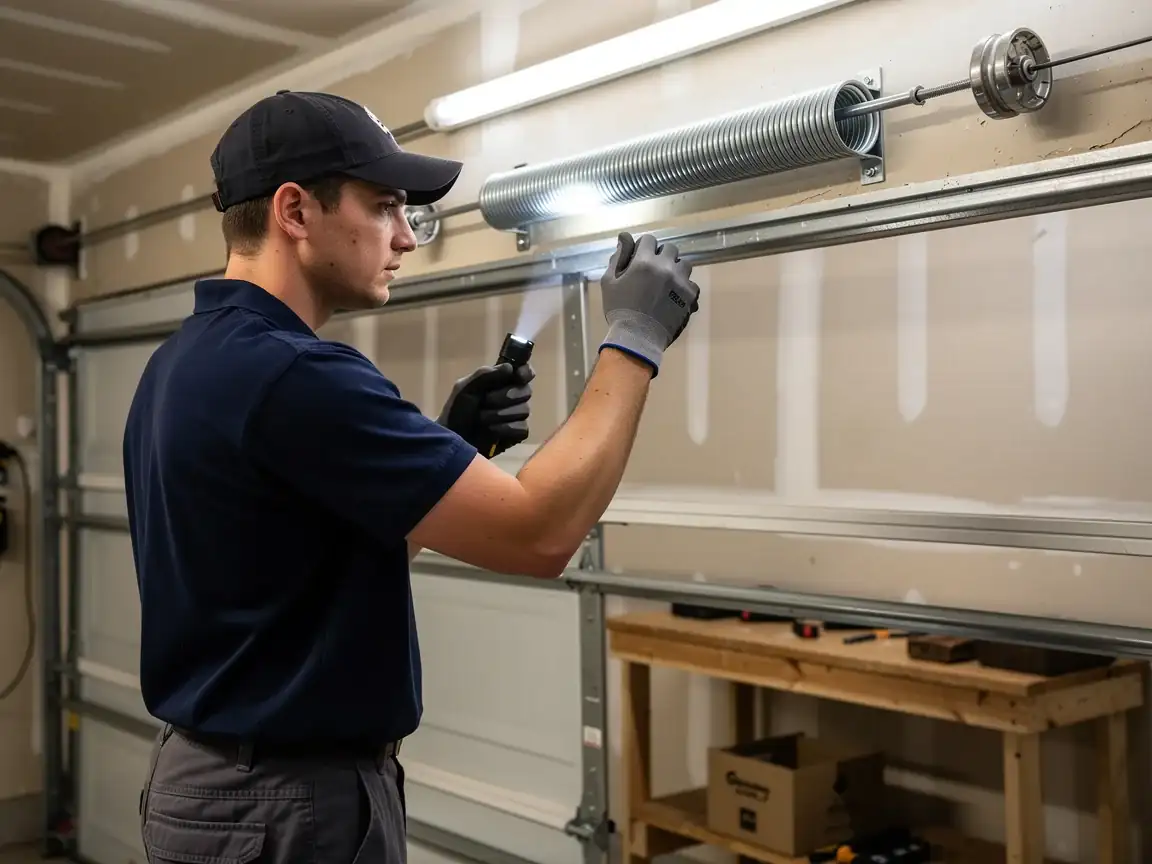
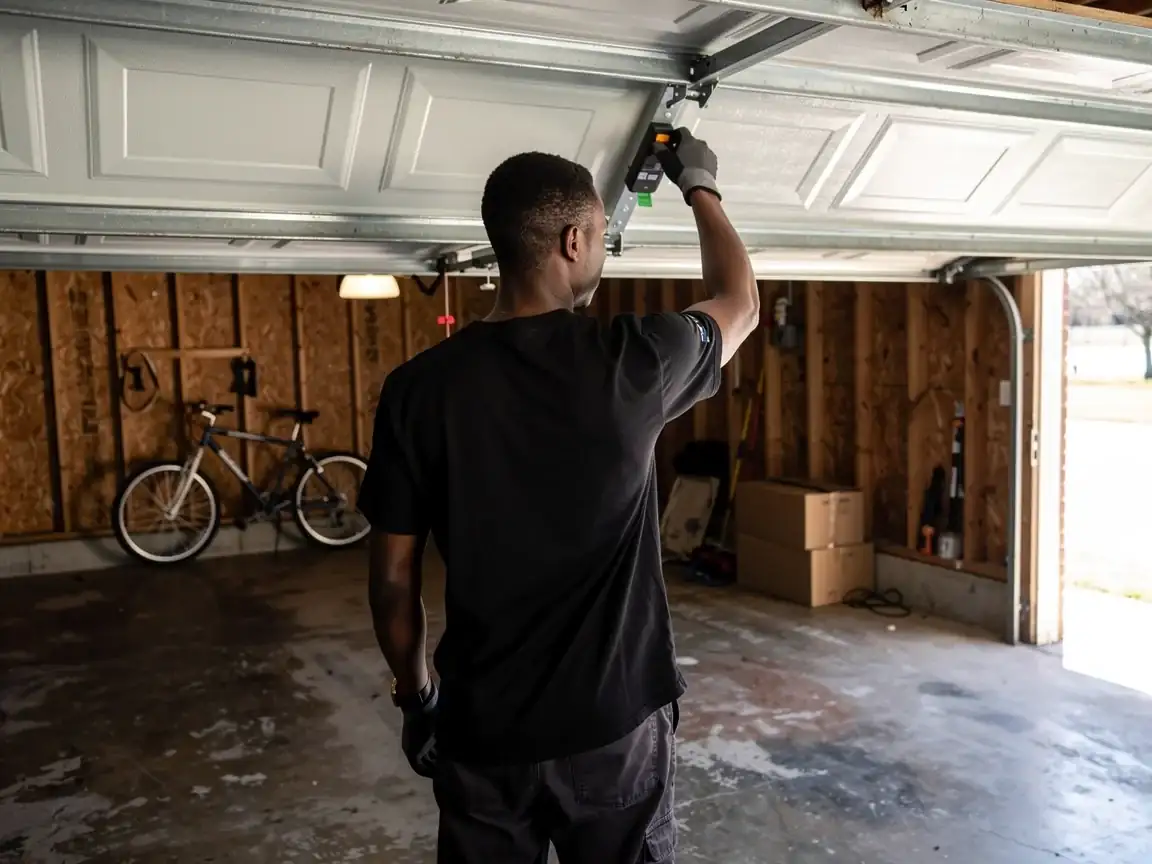
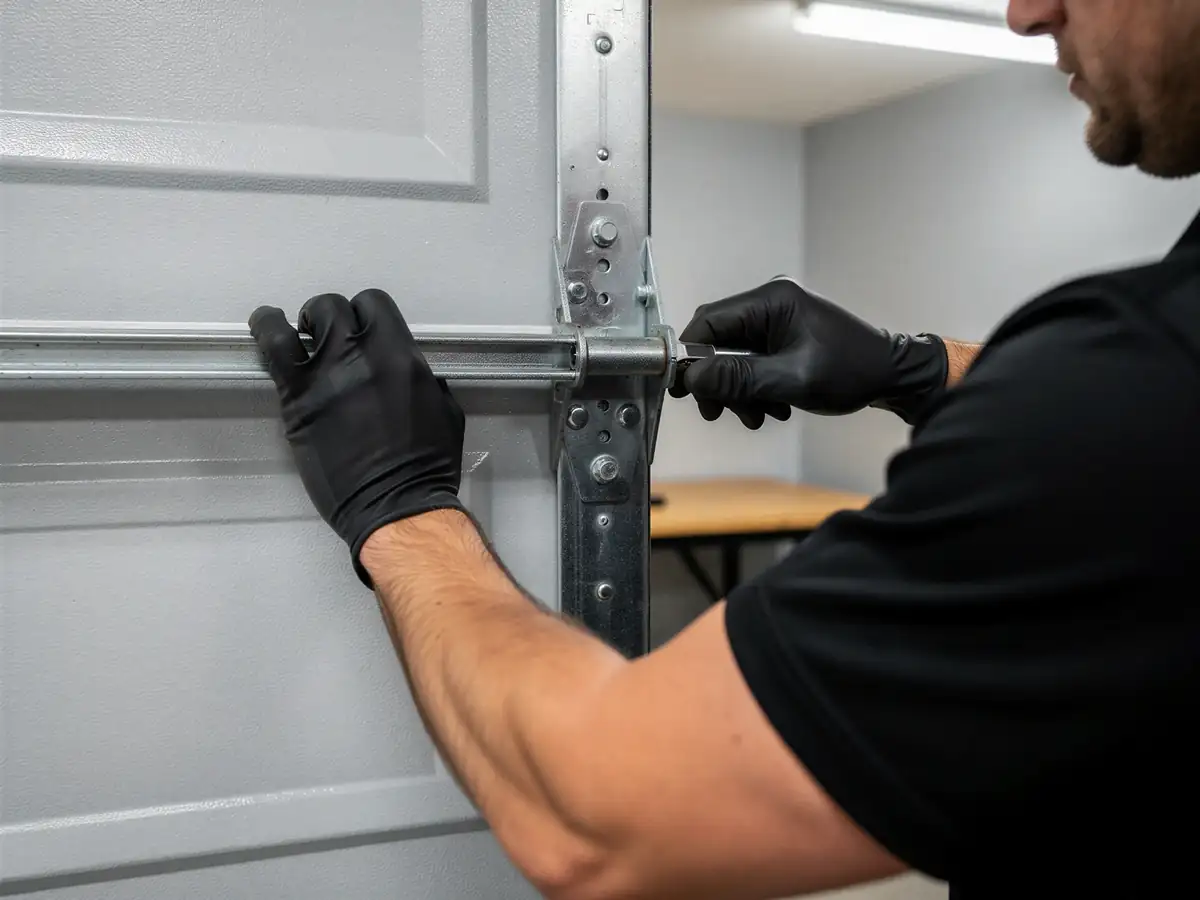
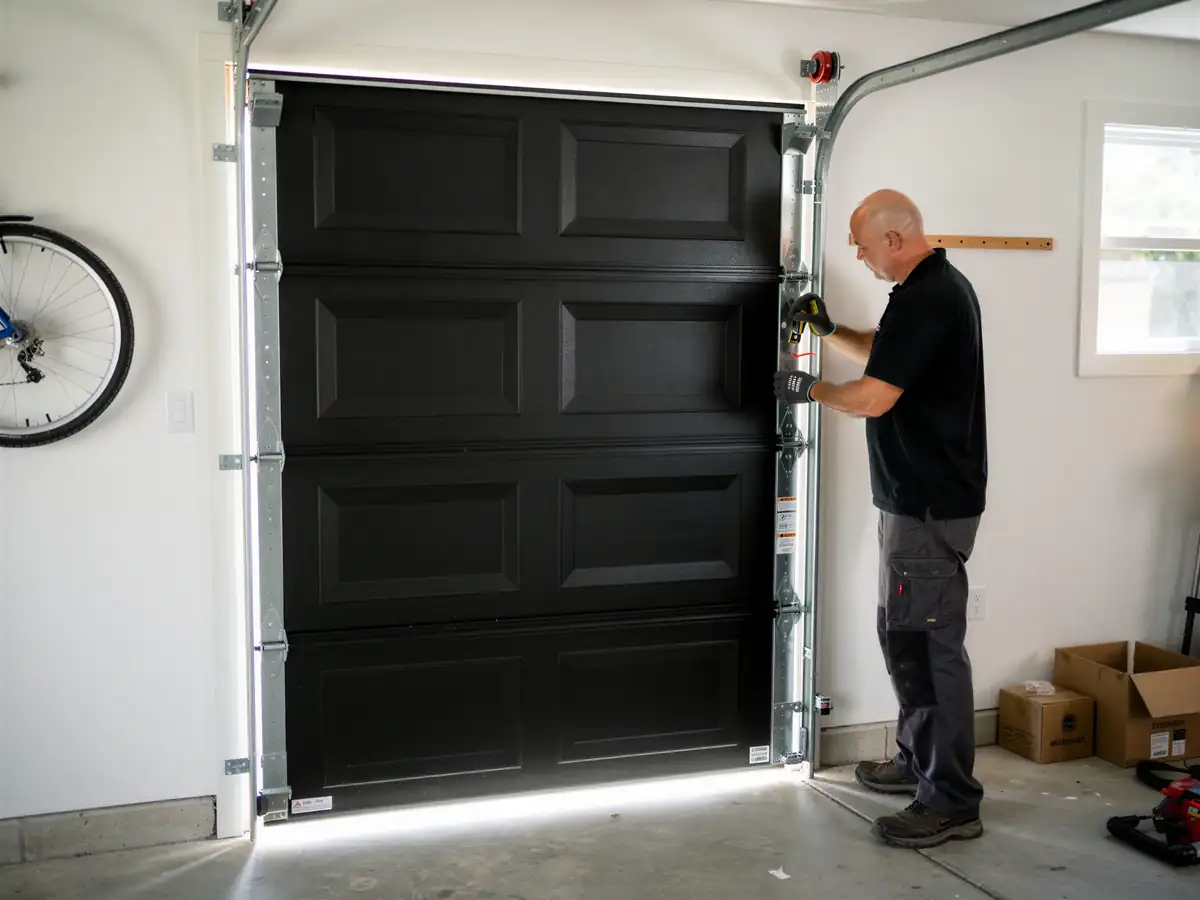
We don't force a jammed door back into track - that's how you bend the panel or snap a cable under tension. First step is releasing the opener and checking whether the track is just knocked loose at the brackets (common, cheap fix) or actually bent (different job, usually a track section replacement rather than a bend-back, since bent track rarely holds its shape twice).
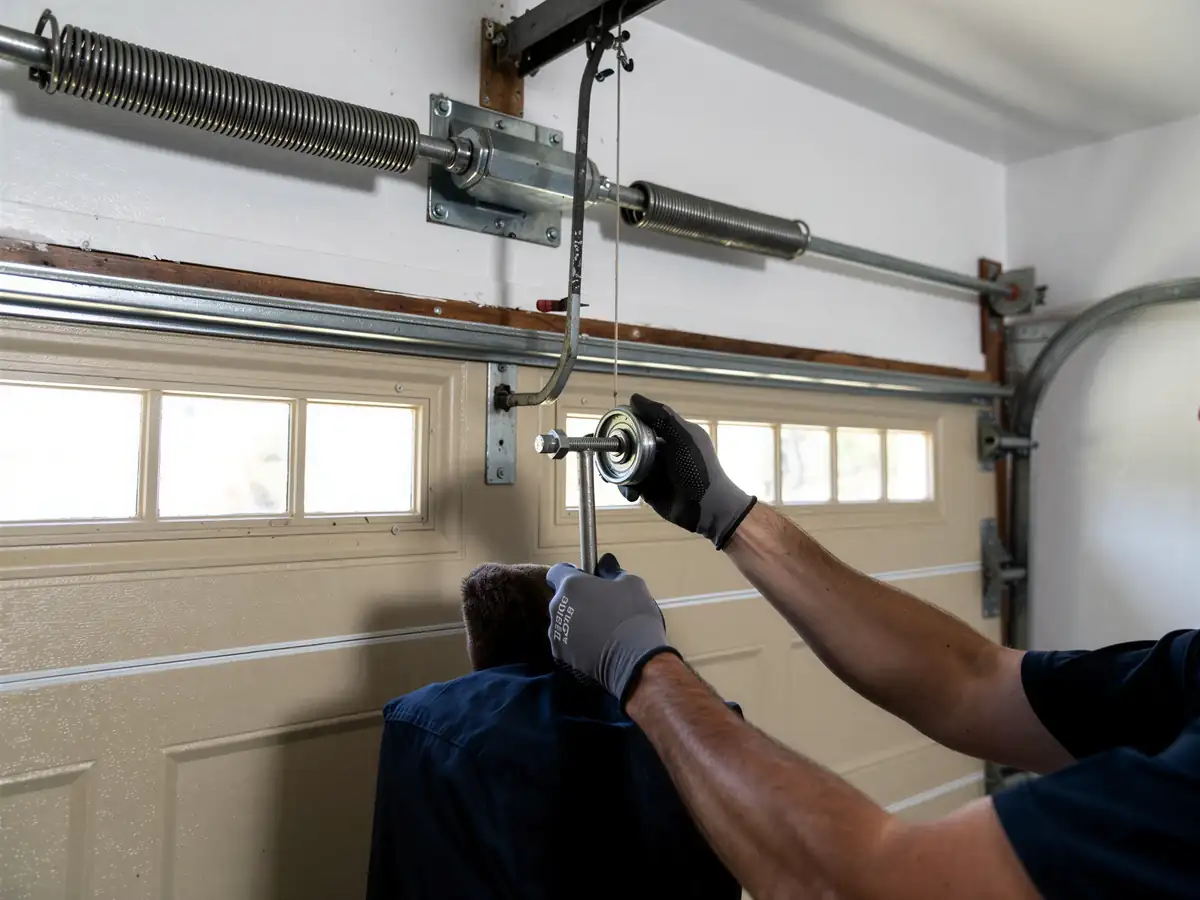
On a 1979-era door we also check the rollers and the hinges at the same time we're in there, because if the rollers are the reason the door walked off track, putting it back on the same worn rollers just buys you a repeat call. Same goes for the track brackets - loose lag screws in a stud that's taken forty years of door vibration don't always bite the same hole twice, so sometimes that bracket gets relocated an inch or two, not just retightened.
We travel out from our Kalispell shop for this, about 12 miles each way, so we bring what a standard off-track call needs on the truck rather than diagnosing on-site and ordering parts after.
What You Pay
We don't have a flat number to quote you here since no price is set for this job without seeing the track and rollers in person - a bracket reset is a different bill than a bent track section plus new rollers and hinges. What we can tell you is what drives the cost on a door from this era: whether the track itself is bent or just loose, how many rollers have gone out of round, and whether the bottom bracket (the one under the most spring tension) needs replacing, which is not a job to do with the door under load.
Columbia Falls households run a median income of $65,313, lower than some of the surrounding service area, and we keep that in mind when we're laying out options - sometimes the honest answer is reset the track and rollers now, and watch the opener motor, rather than replacing parts that still have life in them.
Why This Fails Locally
Columbia Falls carries the same cold climate exposure as the rest of this area
Real winter, real temperature swings - and that matters for off-track doors specifically. Steel track contracts in cold weather, and a bracket that was borderline loose in August can work fully free by January, especially after a door's been slammed shut on a bitterly cold morning because the opener hesitated.
With roughly 2,140 households here, built mostly in that same 1979-and-after window
A lot of these garages are seeing their track hardware strained in the same way at the same age, within a few years of each other. That's not a dramatic claim, just a pattern: doors built to a 1979 spec, in a cold climate, forty-plus years in, tend to fail at the track and roller level before they fail anywhere else on the door.
- 2,140 households
Where This Job Goes Sideways
The call that goes wrong is the one where someone's already tried to force the door back onto the track themselves, usually with a pry bar or by muscling it from inside the garage. That can bend the track further, pop a roller stem, or in a worse case, shift the bottom bracket while the spring is still under tension - which is a different and more serious repair than the one you started with.
The other way this goes sideways: a door that's off track because the opener itself is failing, not because of the hardware. If the opener's drive mechanism is binding or the travel limits are wrong, it can walk a door off track repeatedly even after the track and rollers are fixed right. We'll tell you straight if that's what we're seeing, rather than replacing rollers twice before anyone looks at the opener.